
Sangrita: The Real Recipe, and Why Yours Has Tomato In It
Sangrita is poured beside the tequila, never into it — and the original had no tomato. Both recipes, which tequila belongs with it, and why the shot glass is right here.
Sangrita is not a chaser and it is not a mixer. It is a second glass, poured alongside the tequila and sipped in alternation — never into it. And the version most people make, the tomato one, is not the original. The tomato arrived in 1957, more than thirty years late.
Some links on this page are affiliate links. If you buy through one, this site earns a commission at no extra cost to you. It does not change what is recommended or what is said about it. As an Amazon Associate I earn from qualifying purchases. Full disclosure.
The tomato is a latecomer, and it has a date
Sangrita comes from Chapala, in Jalisco, in the 1920s. The story that survives in the reference literature is specific: the wife of a local restaurateur, José Edmundo Sánchez, served plates of sliced oranges dusted with chile and salt. It worked well enough beside tequila that the juice left on the plate became a drink in its own right, and a liquid version reached the menu in 1925 under the name sangrita del diablo.
There was no tomato in it. The colour that gives sangrita its name — sangrita, little blood — came from the chile powder and from pomegranate. Citrus, chile, salt. That is the whole drink.
The tomato entered with a commercially bottled version in 1957, and because the bottle travelled further than the recipe, the bottle became the definition. Most recipes published in English today reverse-engineer the red colour from tomato juice, because tomato is what the bottle contains.
Neither version is wrong to drink. But they are thirty years apart, and only one of them is what was served in Chapala.
The original: citrus, chile, no tomato
Makes about two cups, which is four generous servings. Everything is stirred, nothing is cooked, and it wants an hour in the fridge before it is any good.
| Ingredient | Amount | Notes |
|---|---|---|
| Fresh orange juice | 1 cup | Seville or bitter orange if you can find it. Otherwise orange with a squeeze of grapefruit. |
| Fresh lime juice | ½ cup | Not bottled. This is the spine of the drink. |
| Pomegranate juice | ¼ cup | Unsweetened. This and the chile are where the red comes from. |
| Chile powder | 1–2 tsp | Piquín traditionally; árbol works. Hot sauce is a legitimate shortcut. |
| Fine salt | ½ tsp | Start here and adjust at the end. |
Stir everything together, taste, and adjust in this order: salt first, then lime, then heat. Chill for at least an hour — the chile needs time to bloom into the juice, and a sangrita served immediately tastes like orange juice with a problem. It keeps three or four days in the fridge and is better on day two.
If the oranges are sharp, a pinch of sugar is not a betrayal. The drink should land slightly sweet, properly sour, and warm at the back — not hot at the front.
The 1957 version, made properly
This is what most people mean by sangrita now, and it is a good drink. Made from scratch it is far better than it is from a bottle, mostly because the bottled ones are sweeter and saltier than anything you would mix yourself.
| Ingredient | Amount | Notes |
|---|---|---|
| Tomato juice | 1 cup | The 1957 addition. Good drink, later drink. |
| Fresh orange juice | ¾ cup | |
| Fresh lime juice | ¼ cup | |
| Hot sauce | to taste | Valentina or Cholula are the usual choices. |
| Salt and white pepper | a pinch of each |
Same method, same hour in the fridge. If you want to taste the difference the 1957 bottling made, the original brand is still sold under the widow’s name — Viuda de Sánchez, the tomato style, a litre at a time. Worth having once as a reference point, even if you go back to making your own.
Which tequila belongs beside it
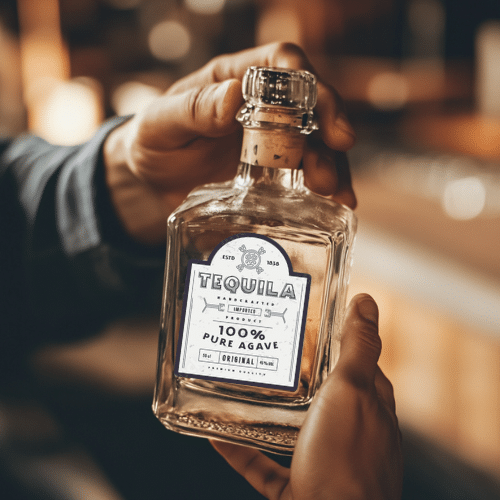
A blanco, or a young reposado. 100% de agave. Not your best bottle.
Sangrita is assertive — citrus, salt and chile — and it will walk straight over the things you paid for in an añejo. Barrel character, vanilla, the long finish: all of it disappears under lime. Save those for a tasting, where the whole point is that nothing else is in the way.
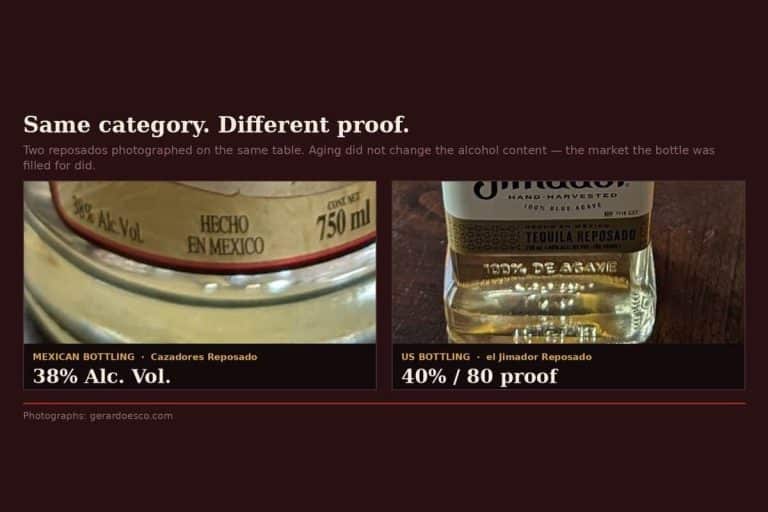
This is also the one occasion where the bottle on my shelf I would not reach for is the expensive one. Four of my most elaborate bottles are at 35% alcohol, the Mexican legal minimum, and they are quiet in the glass to begin with. Against sangrita they would vanish entirely. Where every bottle sits in the range.
What you want is a bottle you are happy to drink for an hour: honest, 100% agave, mid-priced, with enough pepper of its own to answer the chile. What blanco actually is, and how to check the label before you buy.
The glass: this is what caballitos are for
The tall straight shot glass gets criticised constantly, almost always by people describing a tasting. For that criticism is fair — straight sides let aroma escape instead of collecting it. For sangrita it is exactly the right glass, because nothing here depends on aroma and everything depends on two matched pours sitting side by side.
Two glasses, equal measures, and the same shape for both. A set of six plain 2 oz glasses costs less than a bottle of anything worth drinking and covers three people. The glassware that matters is elsewhere — what is actually worth buying, including the case for spending nothing at all.
La bandera: the three-glass version
Line up three glasses: lime juice, blanco tequila, sangrita. Green, white, red — the Mexican flag, which is where the name comes from. It is served, not shot, and it is drunk in that order or in whatever order the table decides, alternating as you go.
It is a good way to serve tequila to people who think they do not like tequila, because each sip arrives with an answer to it. It is a poor way to serve a bottle you want anyone to remember.
What not to do
- Do not pour it into the tequila. Two glasses. Mixing them makes a weak, salty cocktail and wastes both.
- Do not use bottled lime juice. In a drink with four ingredients there is nowhere for it to hide.
- Do not reach for tomato-clam juice. That is a different family of drink entirely — good, but not this.
- Do not serve it warm, and do not chill the tequila to match. The sangrita is cold; the tequila is not. The contrast is part of it.
- Do not use an extra añejo. You will taste the sangrita and the money, in that order.
Sangrita: quick answers
Is sangrita alcoholic?
No. It contains no alcohol at all — it is juice, chile and salt. The tequila is in the other glass.
Is sangrita the same as sangria?
No relation beyond the name, which both take from sangre, blood. Sangria is a Spanish wine punch. Sangrita is a Mexican non-alcoholic accompaniment to tequila, and it is about a fifth of the volume.
Can I use mezcal instead of tequila?
Yes, and it is very good — the smoke and the chile work well together. Mezcal traditionally comes with orange slices and sal de gusano, which is the same idea arriving from the other direction.
How long does homemade sangrita keep?
Three or four days covered in the fridge, and it improves overnight. The citrus eventually goes flat and slightly bitter, which is your signal.
Should sangrita be spicy?
It should be warm rather than hot. The heat sits behind the citrus and arrives after you swallow. If it burns on the way in, it will fight the tequila instead of answering it.
Learn More About Tequila
- Tequila accessories: what is worth buying — the glassware question, answered honestly
- How to taste tequila — for the bottles sangrita would ruin
- Blanco tequila explained — the category that belongs beside sangrita
- Tequila proof and alcohol content — the 35% to 55% range, and what it does in the glass
- How to read a tequila label — checking 100% de agave before you buy
- How to run a tequila tasting night — where la bandera fits and where it does not