
What Is Añejo Tequila? Aging, Flavor & Best Picks (2026)
Añejo tequila is tequila that has been aged one to three years in oak barrels. The Spanish word…
Añejo tequila is tequila that has been aged one to three years in oak barrels. The Spanish word añejo means “aged” or “vintage,” and that time in wood is what gives it its amber color and smooth, oaky flavor — think caramel, vanilla, and baking spice layered over cooked agave. Unlike a blanco, an añejo is meant to be sipped, not shot or blended into margaritas. It’s the step above reposado and the step below extra añejo on the tequila aging ladder.

| Type | Aged | Color | Flavor | Best for |
|---|---|---|---|---|
| Blanco / Silver | 0–2 months | Clear | Crisp, peppery, bright agave | Margaritas, cocktails |
| Reposado | 2–12 months | Pale gold | Balanced — agave with light oak & vanilla | Sipping or upscale cocktails |
| Añejo | 1–3 years | Amber | Smooth, oaky, caramel, vanilla, spice | Sipping neat or on the rocks |
| Extra Añejo | 3+ years | Deep amber / mahogany | Rich, complex, dried fruit, dark caramel | Slow sipping, special occasions |
How Añejo Tequila Is Made
Añejo starts life as a blanco — unaged tequila distilled from cooked blue agave — which is then rested in oak barrels no larger than 600 liters for one to three years. Most producers use smaller ex-bourbon American oak barrels (around 200 liters), because the more contact the spirit has with wood, the more color and flavor it pulls out. That means the amber hue and the vanilla-and-caramel notes are the result of real barrel aging — not added coloring. It’s worth knowing this, because much of the “gold” tequila on shelves gets its color from additives rather than time in a barrel (silver vs gold tequila).
Añejo vs Reposado
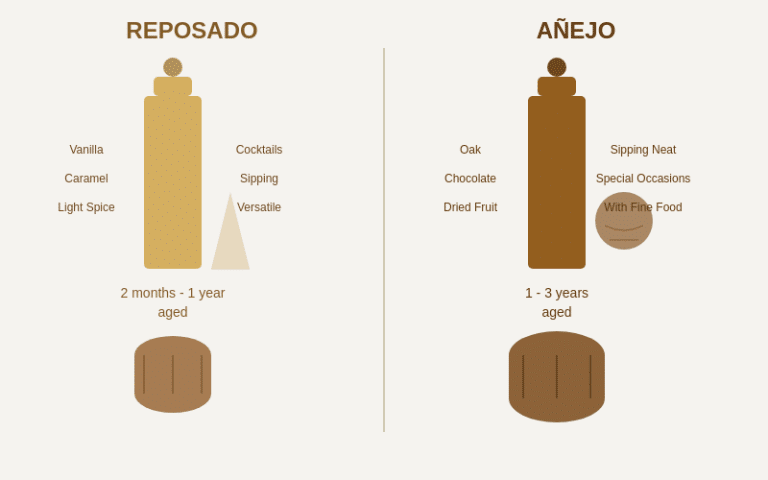
This is the comparison most people are actually trying to make. Both are aged, both are amber-ish, and both come from the same distilleries — the difference is how long they sit in oak. Reposado (“rested”) spends 2 to 12 months in the barrel and keeps a lot of its fresh agave character. Añejo spends a full year or more, so the oak takes over: it’s darker, smoother, and more about caramel and spice than raw agave.
| Feature | Reposado | Añejo |
|---|---|---|
| Meaning | “Rested” | “Aged” |
| Aging | 2–12 months | 1–3 years |
| Color | Pale / light gold | Amber |
| Oak influence | Subtle | Pronounced |
| Agave character | Still forward | Softer, in the background |
| Taste | Balanced, approachable | Smooth, rich, oaky |
| Price (same brand) | Lower | Higher |
| Best for | Everyday sipping, upscale cocktails | Sipping neat, savoring |
I’ve spent years learning about tequila production, and let me tell you; watching a jimador harvest agave with lightning-fast precision still blows my mind every time. These guys can spot a perfectly ripe Blue Weber Agave from 50 feet away. By the way you can there are tours you can take to some magical distilleries in Mexico.
Which should you buy? If you want a versatile bottle that still works in a good cocktail, reposado is the safer pick. If you want something to sip slowly and appreciate on its own, go añejo. For a deeper breakdown, see our reposado vs añejo guide.
Añejo vs Extra Añejo
Extra añejo is the newest official category (added in 2006) and simply means the tequila was aged more than three years. The extra time deepens everything: the color pushes toward mahogany, and the flavor picks up dried fruit, dark caramel, and an almost whiskey-like richness. It’s the most expensive class because the longer a barrel ages, the more spirit is lost to evaporation (the “angel’s share”). Añejo hits the sweet spot for most sippers; extra añejo is the splurge. If you’re shopping the high end, our guide to expensive & luxury tequilas covers the bottles worth gifting.
What Does Añejo Tequila Taste Like?
A good añejo tastes smooth and layered. Up front you’ll get caramel and vanilla from the oak, then warm baking spice (cinnamon, clove) and sometimes toasted nut, dried fruit, or dark chocolate. Underneath it all is the cooked-agave sweetness that reminds you it’s still tequila, not whiskey. Because the aging rounds off the sharp edges, añejo is one of the easiest tequilas to drink neat — there’s very little of that raw alcohol bite. Such is the case with Patron Anejo.
How to Drink Añejo Tequila
Añejo is sipping tequila. The two best ways to enjoy it:
- Neat, in a small glass or tequila snifter, at room temperature — this lets the oak and spice open up.
- On the rocks, if you prefer it a touch cooler and softer, though the ice will mute some flavor as it melts.
What we’d skip: shots and margaritas. Shooting an añejo wastes the very character you paid extra for, and the oak tends to clash with citrus and mixers — a crisp blanco or a reposado makes a far better margarita. If mixing is your goal, our silver vs gold tequila guide points you to the right bottle.
Where to Start
If you’re buying your first añejo, look for something approachable and well-balanced rather than the most expensive bottle on the shelf. Two reliable places to begin:
- An everyday añejo — smooth, easy sipping, good value (check price).
- A step-up añejo — more complexity for special occasions or gifting (check price).
Is Añejo Tequila Worth It?
Within the same brand, an añejo costs more than the reposado, which costs more than the blanco — you’re paying for the barrels, the time, and the spirit lost to evaporation. Whether that’s “worth it” comes down to how you drink. For sipping neat or gifting, añejo earns its price. For margaritas and mixed drinks, you’d be spending more for flavor you’re about to bury under lime and triple sec — so a blanco or reposado is the smarter buy there. And note that price is about aging, not strength: nearly all añejos are still bottled at 40% ABV, the same as a blanco (tequila proof & alcohol content).
Añejo Tequila — FAQ
Is añejo tequila a sipping tequila? Yes — it’s best served neat or on the rocks, not as a shot or in cocktails.
What’s the difference between añejo and reposado? Aging time. Reposado rests 2–12 months; añejo ages 1–3 years, giving it a darker color and much more oak flavor.
How long is añejo aged? One to three years in oak barrels no larger than 600 liters.
Is añejo the same as gold tequila? No. Añejo gets its amber color from real barrel aging, while most mass-market “gold” tequila gets its color from added caramel coloring.
Can you use añejo in a margarita? You can, but it’s usually a waste — the oak clashes with citrus. A blanco or reposado makes a better margarita.
Is añejo stronger than blanco? No. Both are typically 40% ABV (80 proof); aging changes the flavor, not the alcohol content.
What is extra añejo? Tequila aged more than three years — richer, darker, and more expensive than standard añejo.
Conclusion
Añejo tequila represents the perfect marriage of tradition and patience in Mexican spirits. Whether you’re sipping it neat or exploring its versatility in premium cocktails, understanding what makes Añejo special will enhance your appreciation of this remarkable spirit. Remember, the best Añejo tequila is the one that matches your palate and preferences. ¡Salud!
Learn More About Tequila
- Tequla Vs. Mezcal Key Differences
- How to Taste Tequila Like An Expert
- What is a Tequila Flavor Wheel? Complete Guide
- How to Choose the Best Tequilas. Complete Guide
- Types of Tequila