
10 Best Luxury Tequila Brands (2026): A Buyer’s Guide
Luxury tequila is now one of the fastest-growing corners of the spirits world, and the bottles have the…
Luxury tequila is now one of the fastest-growing corners of the spirits world, and the bottles have the decanters, the weight and the prices to match. But expensive and luxury are not the same thing. A genuinely luxury tequila earns its price through 100% blue agave, no additives, traditional production and real barrel aging — not through the bottle it arrives in.
I know that because I read the labels. I keep records on 87 tequilas, 36 of them bottles on my own shelf across 24 distilleries — and on the shelf bottles the NOM is read off the glass rather than copied from a brand website. That record is what the rest of this guide is built on, and it is why this list says where each recommendation is verified and where it is not.
Some links on this page are affiliate links. If you buy through one, this site earns a commission at no extra cost to you. It does not change which bottles are recommended or what is said about them. Full disclosure.
What the decanter doesn’t tell you
Before the list, the six things my own bottles taught me that no price tag shows. Every line below was read off a label I photographed, not from a brand’s press kit.
| Bottle | What the presentation says | What the label says |
|---|---|---|
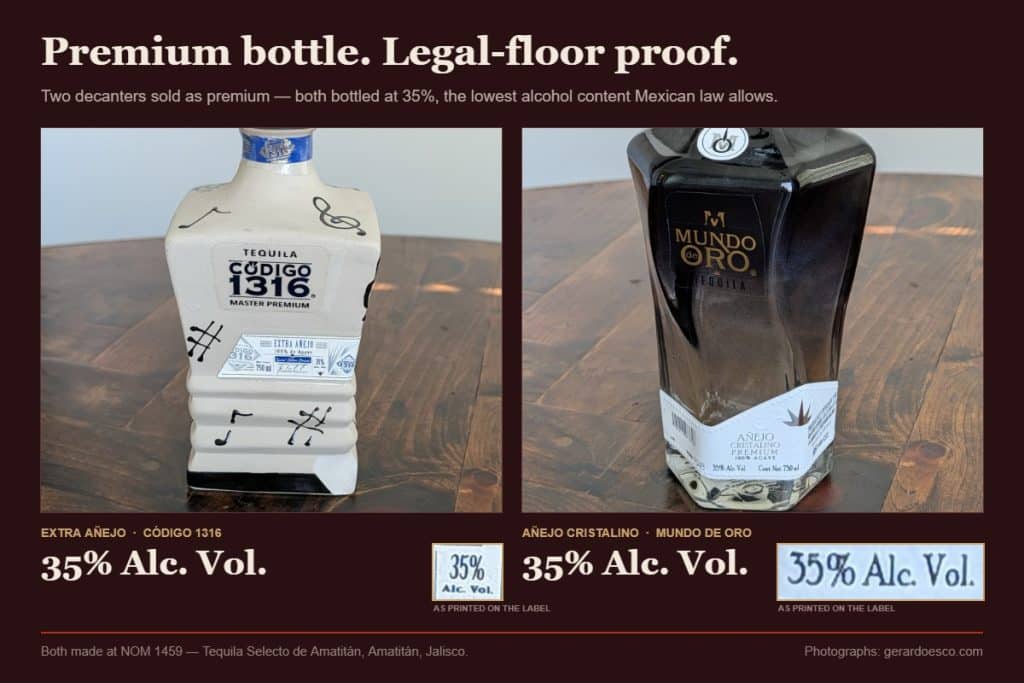
| Código 1316 extra añejo | Hand-painted ceramic decanter, priced and presented as an extra añejo collectible | 35% Alc. Vol. on the front — the legal minimum — and NOM 1459 on the back |
| Mundo de Oro añejo cristalino | Smoked-glass decanter, a completely different brand identity | Also 35%, also NOM 1459. Same producer, Tequila Selecto de Amatitán |
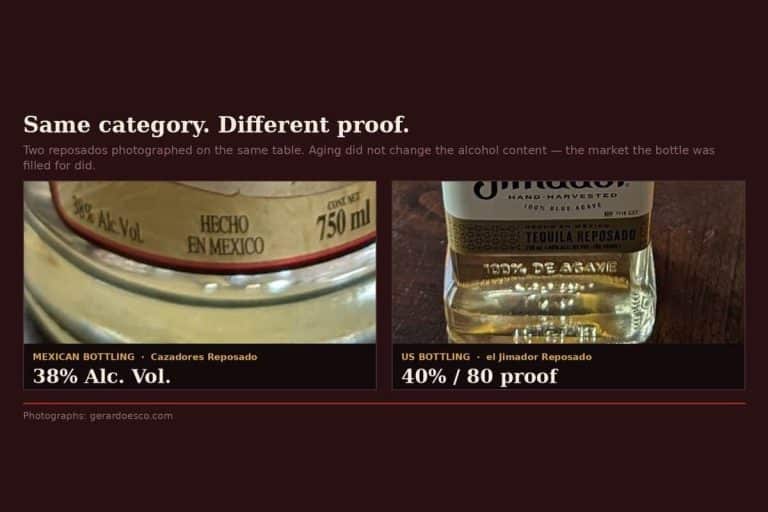
| Don Julio Blanco (Mexican market) | The same expression sold in US stores at 40% | 38% Alc. Vol. Two bottlings of one brand, two different strengths |
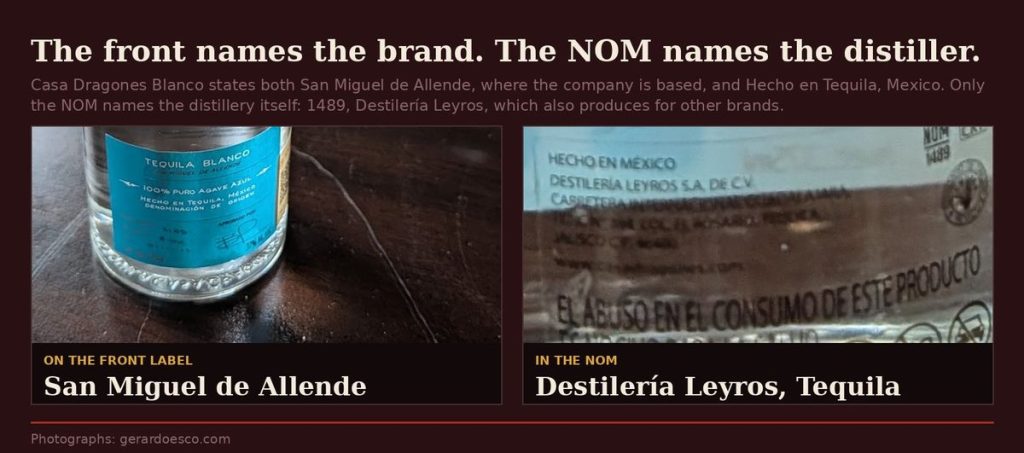
| Casa Dragones Blanco | The front reads “San Miguel de Allende,” 300 miles from tequila country | NOM 1489: Destilería Leyros, in Tequila, Jalisco. The NOM is the binding fact |
| Don Ramón Platinium vs Reserva de Don Ramón | One brand name on both bottles | NOM 1417 and NOM 1590. Different distilleries entirely |
| Gran Centenario Azul reposado | Reposado, no time stated on the front | The back says “2 meses” — two months, the legal minimum for the category |
The Código 1316 and Mundo de Oro pair is the one to sit with. Two bottles that look nothing alike, both sold as premium, both bottled at the legal minimum strength, and both carrying the same four digits: NOM 1459. A decanter tells you what a brand spent on packaging. The NOM tells you which distillery actually made the liquid, and the directory shows you who else it makes for.
None of that makes those bottles bad. It makes them priced for presentation, which is a different purchase from the one most people think they are making. If you want the mechanics: why some premium tequila is only 35%, and how to read the back label yourself.
What makes a tequila “luxury”?
Five things separate a true luxury tequila from a merely pricey one. The first four are in the liquid. The fifth is the one almost nobody checks.
- 100% blue Weber agave — no mixto, no added sugars.
- Additive-free production — the flavour comes from agave and oak, not caramel colouring or glycerin. Mexican regulation allows up to 1% of finished volume in additives with no disclosure on the label.
- Traditional methods — stone-oven cooking, tahona milling, small-batch distillation.
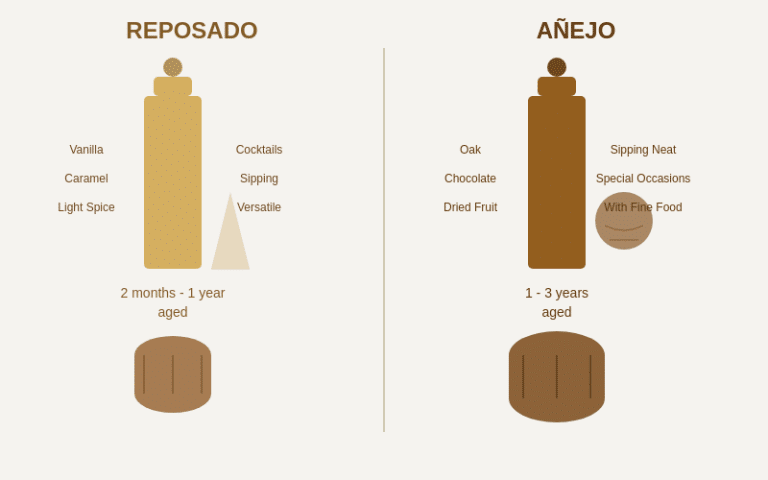
- Real aging — reposado (2–12 months), añejo (1–3 years) or extra añejo (3+ years) in oak.
- A distillery it will name. The NOM number tells you who made it. A brand that owns its distillery, or names it plainly, is telling you something a contract-bottled brand cannot.
Strength is not on that list, and it is worth saying why. Aging does not change alcohol content, and a higher price does not either. The two 35% bottles above prove the point on my own shelf.
Quick picks
| Best for | Bottle | Approx. price | |
|---|---|---|---|
| Best overall gift | Clase Azul Reposado | ~$150 | Check price |
| Most recognisable | Don Julio 1942 | ~$170 | Check price |
| Connoisseur’s sipper | Casa Dragones Joven | ~$285 | Check price |
| Best value luxury | Fortaleza Añejo | ~$100 | Check price |
| Gift under $75 | Casamigos Añejo | ~$60 | Check price |
| No-budget milestone | Gran Patrón Burdeos | ~$500 | Check price |
Prices are bands, not quotes. Spirits pricing moves by state and by retailer, so the linked page shows what the bottle actually costs today.
The 10 best luxury tequila brands in 2026
Where I have read a bottle’s NOM myself, I say so. Where I have not, I say that too — a brand’s own website is not evidence, and several of the NOMs published on aggregator sites turned out to be wrong when I checked them against the glass.
1. Clase Azul Reposado
Reposado · ~$150 · aged ~8 months
No bottle says “luxury tequila” faster than the hand-painted ceramic decanter, and each one really is individually finished, which is a gift in itself. Inside it is soft and dessert-leaning: honey, vanilla, caramel and cinnamon over a gentle agave base. It is not the most agave-forward sipper here, and the decanter is a real part of what you are paying for.
Best for: gifting, and anyone who will keep the bottle afterwards · Check price for Clase Azul Reposado
2. Don Julio 1942
Añejo · ~$170 · aged at least 2.5 years
The bottle everyone recognises, and the one most often asked for by name. Caramel, vanilla, warm oak and a long soft finish. Don Julio’s distillery sits in Atotonilco el Alto, in the Highlands, which is where its rounder, sweeter house style comes from.
Best for: a gift for someone who already knows what they like
Verified: I have read NOM 1449 and the Atotonilco el Alto address off my own Don Julio bottles. Note that Mexican-market Don Julio runs 38%, US bottlings 40%. · Check price for Don Julio 1942
3. Casa Dragones Joven
Joven · ~$285 · blanco blended with extra añejo
A small-batch joven: blanco blended with a little extra añejo, so it drinks clean and peppery with a touch of oak sweetness. Sold in a signature etched bottle. It is the bottle to bring to someone who drinks whisky neat.
Best for: the person who sips, not mixes
Verified: Partly. I have read NOM 1489, Destilería Leyros in Tequila, Jalisco, off a Casa Dragones Blanco. The Joven is a separate product and I have not checked its NOM myself, so I am not claiming they share one. · Check price for Casa Dragones Joven
4. Cincoro Gold
Añejo blend · ~$200 · blend of añejo and extra añejo
The basketball-owner brand that turned out to be serious: a blend of añejo and extra añejo in a heavy angular bottle, rich with dried fruit and toasted oak. Expensive for what it is, but the liquid holds up.
Best for: a statement gift that is not Clase Azul · Check price for Cincoro Gold
5. Fortaleza Añejo
Añejo · ~$100 · stone oven, tahona milled
The purist’s pick, and the best value on this list. Brick-oven cooked, tahona-milled, additive-free, made by the family that has been at it in Tequila for five generations. Cooked agave, black pepper and butter, with oak in support rather than in charge. If you want to taste what traditional production actually does, this is the cheapest honest answer here.
Best for: anyone who cares what is in the glass more than what it arrived in · Check price for Fortaleza Añejo
6. Patrón El Cielo
Blanco · ~$200 · four-times distilled
Patrón’s prestige blanco: four distillations, unusually soft, citrus and light pepper. A luxury blanco is a harder sell than a luxury añejo, but this is the one that makes the case.
Best for: the margarita drinker you want to convert to sipping · Check price for Patrón El Cielo
7. Tears of Llorona Extra Añejo
Extra añejo · ~$230 · 43% ABV
Germán González’s extra añejo, aged around five years across Scotch, sherry and cognac casks. Deep, dried-fruit, almost whisky-adjacent, and bottled at 43% rather than the usual 40%, which is why it carries so much flavour per sip.
Best for: whisky and cognac drinkers exploring tequila · Check price for Tears of Llorona Extra Añejo
8. Gran Patrón Burdeos
Extra añejo · ~$500 · Bordeaux-barrel finished
The top of the Patrón range: extra añejo finished in Bordeaux wine barrels, in a crystal decanter. Rich, layered and unmistakably a splurge.
Best for: milestone gifts and collectors · Check price for Gran Patrón Burdeos
9. Casamigos Añejo
Añejo · ~$60
The gateway bottle: caramel, vanilla and soft spice in an easy, approachable style, at a price that does not scare off a gift-giver. Not the most complex tequila here, and some of the price is the name on the label — but it is the most giftable bottle under $75.
Best for: a premium gift on a sensible budget · Check price for Casamigos Añejo
10. Jose Cuervo Reserva de la Familia
Extra añejo · ~$130+ · annual artist-designed box
Cuervo’s serious side: a limited extra añejo released each year in a collectible artist-designed box. Dried fruit, spice and deep oak, from a company most people only know from the well.
Best for: collectors, and the gift that comes with a story
Verified: Partly. Cuervo’s Los Camichines distillery carries NOM 1122 — I have read those digits off a Gran Centenario Azul on my own shelf — but I have not had a Reserva de la Familia bottle in hand to confirm it. · Check price for Jose Cuervo Reserva de la Familia
Honourable mentions, all 100% agave and additive-free: El Tesoro, Tequila Ocho, Casa Noble and G4. Each punches above its price, and none of them spends your money on a decanter.
Luxury tequila price tiers
| Price | Tier | What you get | Honest note |
|---|---|---|---|
| $50–100 | Entry luxury | Real aging and honest production, plain packaging. Fortaleza Añejo and Casamigos Añejo live here. | The best liquid-per-dollar on the page |
| $100–200 | Gift territory | Where presentation starts being part of the price: Clase Azul Reposado, Don Julio 1942, Cincoro Gold. | The band most gifts land in |
| $200–350 | Collector’s shelf | Extended aging, cask finishes, limited runs. Casa Dragones Joven, Tears of Llorona. | Buy for a specific person, not to impress a room |
| $350+ | Statement bottles | Crystal decanters, ultra-aged expressions, Gran Patrón Burdeos and above. | Presentation is now most of the cost |
The pattern holds across every bottle I have recorded: past roughly $200, each extra dollar buys less liquid quality and more presentation. That is not a scandal — presentation is a real part of a gift — but it should be a decision rather than an assumption.
Buying luxury tequila as a gift
Most of this page’s readers are buying for someone else. Match the bottle to the person rather than to the price.
| Who it is for | What to buy | Why |
|---|---|---|
| They drink margaritas and cheap blanco | Patrón El Cielo, or Fortaleza Añejo | Both show what the category can do without being intimidating. Include two copitas. |
| They drink whisky or cognac | Tears of Llorona Extra Añejo | Cask-finished, 43%, and structured like the spirits they already love. |
| They already own Don Julio 1942 | Cincoro Gold or Casa Dragones Joven | The step up that is not the same bottle they were given last year. |
| They care about the bottle as an object | Clase Azul Reposado | The decanter is the gift. Everyone knows it on sight. |
| It is a milestone: wedding, retirement, big birthday | Gran Patrón Burdeos, or Reserva de la Familia | One is a crystal decanter; the other is dated and collectible, which suits an anniversary. |
| You have about $60 and do not want it to look like $60 | Casamigos Añejo | Recognisable name, dark bottle, reads as a premium gift. |
Four things worth knowing before you buy
- Tequila does not age or improve in the bottle. Once it is bottled the clock stops, so nobody is “saving” it into something better. Stored upright, away from light and heat, an unopened bottle keeps for years — a cork-sealed decanter wants upright storage in particular.
- Ceramic decanters do not travel well. If it is being shipped or flown, pick glass, or hand it over in person.
- Check what is being shipped, not just what is pictured. Bottle size differs between markets: 700 ml is normal in Mexico and Europe, 750 ml in the US. Same bottle, 50 ml less.
- Order earlier than you think. Alcohol shipping needs an adult signature on delivery, and the good bottles sell out in December rather than getting discounted.
And if you want to be certain that what you are handing over is what it claims to be, the back label settles it in about ten seconds: here is what to look at.
Is expensive tequila worth it?
Up to about $150, yes, and clearly so. That is the band where the money buys stone ovens, tahona milling, longer barrel time and a distillery willing to put its name on the label. The difference between a $25 mixto and a $100 additive-free añejo is not subtle, and anyone can taste it.
Above roughly $200, the honest answer is that you are buying an object and an occasion as much as a liquid. Sometimes that is exactly right — a retirement gift should look like one. But the two 35% bottles on my shelf are a useful reminder that a heavy decanter is not evidence of anything, and that the cheapest bottle on this list, Fortaleza Añejo, is also the one I would pour for someone who wanted to understand what tequila can be.
If a bottle is a gift, pay for presentation with your eyes open. If it is for you, pay for production.
Frequently asked questions
What is the best luxury tequila for a gift?
Clase Azul Reposado, because the hand-painted ceramic decanter reads as a gift before anyone tastes it. Don Julio 1942 is the close second and is more familiar. If the person actually drinks tequila rather than displaying it, Fortaleza Añejo is the better bottle for less money.
What is the best luxury tequila under $100?
Fortaleza Añejo, at roughly $100, and Casamigos Añejo at around $60 if the name on the label matters to the recipient. Fortaleza is the better liquid by a distance.
Does expensive tequila taste better?
Up to a point. Price correlates with additive-free production, traditional methods and real barrel time — all of which you can taste. Past about $200 the extra money mostly buys packaging, limited releases and brand prestige.
Does tequila get better in the bottle?
No. Aging happens in oak, and stops at bottling. A 2019 bottle of extra añejo opened today tastes the way it did in 2019, assuming it was stored upright and out of the light.
Is a higher-proof tequila a better tequila?
Not automatically, but strength is a fairer signal than packaging. Tequila is legal from 35% to 55%, and some of the most expensive-looking bottles I own sit at the 35% floor. A bottle at 43–46% is giving you more spirit and less water — the full explanation is here.
How do I know a luxury tequila has no additives?
You cannot tell from the label — Mexican regulation permits up to 1% of finished volume in additives with no disclosure. You have to rely on independent verification and on producers who state it plainly. Here is what can actually be checked.
What is the most expensive tequila brand?
The record bottle is Tequila Ley .925 “Pasión Azteca,” reported at around $1.5 million, almost all of it the precious-metal bottle. Among bottles you can actually buy, Clase Azul’s Ultra and the top Gran Patrón expressions sit at the top. What they cost and why.
Do two luxury brands ever come from the same distillery?
Regularly. Two bottles on my own shelf that look nothing alike — Código 1316 and Mundo de Oro — both carry NOM 1459, Tequila Selecto de Amatitán. The four-digit NOM is the only reliable way to tell, and the directory lists who makes what.
One distinction worth carrying into the shop. A bottle can be expensive because the release was genuinely small, or because the packaging was genuinely elaborate — and those are different purchases. Limited edition tequila covers the first, collector’s edition tequila the second, including the uncomfortable pattern on my own shelf: the four most elaborate bottles I own are bottled at the legal minimum.
Learn more
- How to Read a Tequila Label — the NOM, the CRT mark, 100% de agave versus mixto
- The NOM Directory — which distillery makes which brand
- Additive-Free Tequila — what the label can and cannot tell you
- Tequila Proof and Alcohol Content — why some premium bottles are only 35%
- Most Expensive Tequila Brands — what they cost and why
- Añejo Tequila Explained · Silver vs Gold · The 5 Tequila Regions of Mexico