

Tequila Tasting Mistakes to Avoid in 2026: Expert Guide
Did you know that over 70% of people make at least three fundamental mistakes when tasting premium tequila?…

Did you know that over 70% of people make at least three fundamental mistakes when tasting premium tequila? As Mexico’s most iconic spirit continues to surge in popularity, with premium tequila sales growing by 38% in 2023, it’s crucial to know how to appreciate it properly. Whether you’re a curious newcomer or a seasoned enthusiast, avoiding these common tequila tasting mistakes will help you experience tequila’s true complexity and character. Let’s explore the most frequent errors and how to correct them!
Some links on this page are affiliate links. If you buy through one, this site earns a commission at no extra cost to you. It does not change which bottles are recommended or what is said about them. Full disclosure.

Temperature and Serving Mistakes
Let me share something that revolutionized my premium tequila appreciation journey. Walking into fancy bars and watching them pull premium tequila from the freezer used to drive me nuts. After attending a professional tequila tasting workshop with a master tequilero in Jalisco, I discovered that proper tequila serving temperature is crucial. I do not recommend drinking tequila straight out of the freezer. Ice-cold temperatures actually numb our taste buds and lock up the delicate agave expression in tequila.
Improper storage and temperature control of tequila can significantly impact its flavor. The unique compounds that contribute to the rich tastes of cooked agave, citrus, and vanilla are unable to express themselves fully. At low temperatures, the aromatic compounds that give tequila its distinct smell cannot evaporate effectively, resulting in a loss of about 80% of the spirit’s complex flavors. Don’t do not drink it too cold!!
Through extensive spirit tasting experience, I’ve found that the proper tequila serving temperature is between 62-68°F (16-20°C). This is where traditional tequila service really shines. At this range, your tequila flavor wheel comes alive – from earthy minerals characteristic of highland tequila characteristics to gentle pepper notes, even chocolate or floral hints in an añejo tequila appreciation session.
Another crucial aspect of proper tequila serving. I cringe thinking about serving premium spirits in shot glasses. Now I use a proper Riedel tequila glass or snifter. Proper spirit assessment demands glassware with a slight taper to concentrate the tequila aroma wheel, with enough room for full flavor development.
One often-overlooked aspect of tequila tasting etiquette is resting time. After pouring, let your spirit rest for 2-3 minutes. This patience in your tequila tasting steps allows oxygen exposure to enhance the agave spirit complexity and release subtle tequila flavor compounds.
Try this tequila evaluation method yourself: compare two servings – one cold, one at proper temperature. The difference in spirit tasting structure is remarkable! The room temperature version reveals the full spectrum of your tequila sensory analysis. Follow these premium tequila service guidelines, and you’ll transform your entire tequila tasting experience from ordinary to extraordinary.
Nosing and Aroma Assessment Errors
My first attempt at professional tequila tasting went hilariously wrong – I plunged my nose deep into the glass, took an aggressive sniff, and nearly singed my sinuses! That mistake taught me everything about spirit nosing mistakes.
Here’s a crucial lesson in tequila tasting etiquette that most spirit tasting guides miss: your olfactory system is incredibly sensitive. During my premium spirit assessment training, a veteran catador (professional taster) explained that aggressive nosing overwhelms your receptors with alcohol vapor, making it impossible to detect the complex tequila aroma profile.
The proper tequila nosing technique is deceptively gentle. Following traditional tequila service methods, hold your tequila glassware about 1.5 inches (4 cm) from your nose. Take soft, delicate sniffs to discover the full tequila flavor wheel – from highland tequila characteristics to lowland tequila traits.
A common mistake in spirit tasting protocol is leaving your glass exposed between evaluations. Those precious tequila flavor compounds evaporate quickly! Professional tequila tasting standards recommend using a tasting card to preserve the agave spirit complexity. This simple step in proper spirit assessment makes a remarkable difference in your tequila sensory analysis.
Here’s a tequila evaluation method that transformed my approach: begin with the glass at chest level and slowly raise it while practicing proper tequila nosing. I’ve learned to approach from multiple angles, as each position reveals different aspects of the tequila aroma wheel. This technique is especially important when developing your tequila tasting vocabulary.
Temperature control significantly impacts your tequila flavor identification. The full spectrum of agave expression in tequila only emerges at the proper tequila serving temperature. As your spirit warms slightly, you’ll discover layers of complexity – from cooked agave to spice notes, and even subtle mineral or fruit characteristics that define premium tequila appreciation.
Remember, developing your spirit tasting structure takes time. Focus on the journey of tequila flavor evolution rather than rushing to match specific tasting notes. True tequila tasting experience comes from patient, mindful evaluation.
Tasting Technique Blunders
Let me share some critical spirit tasting mistakes I made during my premium tequila appreciation journey. When I first started exploring premium spirit assessment, I rushed through tastings like a college student – completely missing the art of proper tequila serving and tasting.
My most embarrassing moment in tequila tasting etiquette? Bringing an expensive añejo tequila appreciation session to a friend’s house, only to watch them shoot it back. Here’s what every tequila tasting guide emphasizes: shooting premium tequila bypasses all the complex tequila flavor compounds that master distillers carefully develop through traditional tequila service.
Let me share the proper tasting technique I learned in my professional tequila tasting training. The key to tequila flavor development is taking a small sip and letting it coat your tongue for 5-8 seconds. This spirit tasting protocol allows you to experience the full tequila flavor wheel – watching how initial impressions transform into complex waves of agave expression in tequila.
Spirit tasting preparation is crucial. A common mistake in tequila tasting steps is consuming coffee beforehand. Following proper spirit assessment guidelines, I now prepare with room temperature water and neutral crackers 30 minutes before evaluating tequila flavor evolution.
Temperature control is essential in proper tequila storage and service. For optimal tequila sensory analysis, start your blanco tequila tasting slightly cooler (62°F), then allow your reposado tasting notes and añejo tequila appreciation to develop at slightly warmer temperatures. This progression in premium tequila service reveals the full spectrum of highland tequila characteristics and lowland tequila traits.
Here’s a key tequila evaluation method: between tastings, cleanse your palate with plain tortilla and room temperature water. This spirit tasting structure prevents fatigue and maintains your tequila tasting vocabulary accuracy. During vertical tastings, proper temperature progression unveils remarkable complexity factors in premium spirit assessment.
Remember, developing your tequila flavor identification skills takes patience. Each premium tequila service deserves time to reveal its complete agave spirit complexity. Trust your tequila tasting experience to evolve naturally through mindful evaluation.
Common Palate Interference Mistakes
I’ve had some hard-learned lessons about palate interference. I used to think I could just jump into a tequila tasting whenever I felt like it, but boy, did I learn that timing and preparation make a huge difference!
One of my most memorable tasting blunders happened after a spicy Thai lunch. I was excited to try this new añejo I’d been saving, but everything just tasted like alcohol and wood. No subtle notes, no complexity – just wasted money and disappointment. That experience taught me a valuable lesson about how certain foods can completely wreck your palate for hours afterward.
Here’s what I’ve learned about the worst palate-killers: anything spicy is absolute murder on your taste buds. But there are some sneaky offenders too! Coffee is a major culprit – I used to love doing Sunday morning tastings with my coffee still on my breath (terrible idea). Even that morning orange juice can mess with your ability to detect subtle flavors. And don’t get me started on garlic – it’s like putting a mask on your taste buds for the whole day.
Speaking of timing mistakes, I made a rookie error at a tasting event by trying to “prepare” with a big breakfast. Turns out, having a full stomach actually dulls your palate sensitivity. These days, I know to eat a light, neutral meal about 2-3 hours before any serious tasting session. Think plain toast or a simple sandwich – nothing that’ll linger on your palate.
I also have a pre-tasting preparation routine. About two hours before a tasting, I stop eating anything with strong flavors. Thirty minutes before, I start sipping room temperature water – not cold, as that can numb your taste buds. I also keep some plain, unsalted crackers handy to reset my palate between expressions. I’ve learned to limit myself to 3-4 expressions max, with plenty of water and neutral crackers in between.
The biggest game-changer was creating a “clean palate environment” before tastings. That means no scented candles, no food cooking nearby, and definitely no perfumes or colognes. I once had to completely restart a tasting because someone walked in wearing strong perfume – those aromatic compounds can seriously interfere with your ability to detect subtle notes in the tequila.
Remember, your palate is like a sensitive instrument – it needs proper care and preparation to perform at its best. Taking these extra steps might seem fussy at first, but they make a world of difference in your ability to appreciate all the nuances in a good tequila.
Evaluation and Assessment Errors
Let me share how I refined my premium spirit assessment techniques through years of tequila tasting experience. Despite reading countless spirit tasting guides, my first professional tequila tasting with a master distiller revealed how much I had to learn about proper tequila evaluation.
A classic mistake in tequila sensory analysis is rushing to judgment. I once dismissed a premium tequila as “harsh” after one sip, completely misunderstanding highland tequila characteristics. Those intense peppery, mineral-forward notes I criticized are actually prized markers in traditional tequila from the Highlands region.
Here’s a common misconception in tequila flavor identification: equating color with quality. Many novices in tequila appreciation courses assume darker añejo tequila expressions indicate superior craftsmanship. However, proper spirit assessment reveals that even a crystal-clear blanco tequila tasting can showcase remarkable agave spirit complexity.
Systematic spirit evaluation methods are crucial. I’ve developed a detailed tequila scoring system that tracks production region, cooking method, still type, and comprehensive tequila tasting vocabulary. This structured approach to premium tequila appreciation helps develop your spirit tasting protocol and understanding of tequila complexity factors.
A breakthrough in my tequila flavor wheel interpretation came from learning about flavor development. Professional tequila tasting emphasizes evaluating the complete journey – entry, mid-palate, and finish. This approach to tequila flavor evolution reveals how seemingly simple spirits can unfold into fascinating expressions of agave spirit complexity.
Temperature control is vital in proper tequila serving. Through careful spirit tasting structure, I’ve learned that blanco tequila shows best around 62°F, while reposado tasting notes and añejo tequila appreciation require slightly warmer temperatures for optimal flavor compound expression. However, this can also be a personal preference.
Remember, mastering tequila evaluation methods is an ongoing journey. Your understanding of tequila flavor analysis and lowland tequila traits will continually evolve. Many expressions I initially misunderstood are now favorites in my premium spirit service rotation, proving how crucial proper spirit assessment skills are to fully appreciating this complex spirit.
The mistake that costs the most: tasting the bottle
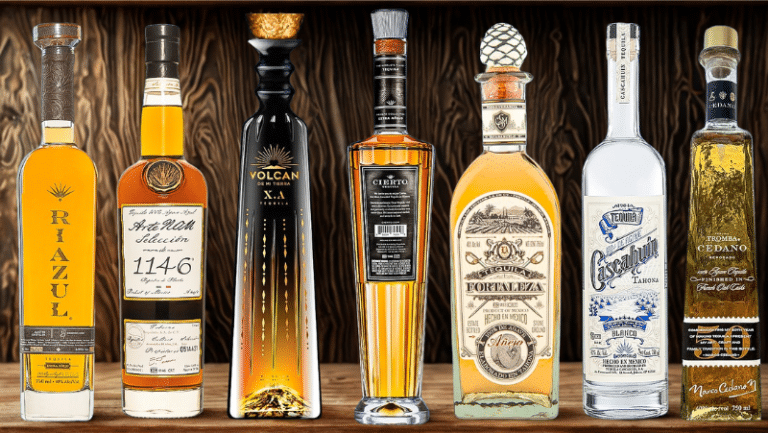
Every mistake above happens at the table. This one happens at the shelf, and it decides what you are tasting before you pour. The elaborate bottle is frequently the weaker spirit. Here is what sits on my own shelf, with the alcohol figure read off each front label rather than taken from a listing:
| Bottle | Presentation | Alcohol | Distillery |
|---|---|---|---|
| Código 1316 extra añejo | Hand-painted ceramic decanter | 35% | NOM 1459 |
| Mundo de Oro añejo cristalino | Smoked-glass decanter | 35% | NOM 1459 |
| Don Ramón Platinium | Metallic-finish bottle | 35% | NOM 1417 |
| La Cuerda añejo | Embossed glass | 35% | NOM 1589 |
| G4 108 | Plain bottle, screw cap | 54% | NOM 1579 |
Four premium-priced decanters at 35%, which is the legal minimum for tequila in Mexico, and one plain bottle at 54%, near the legal ceiling. That is not a small difference at the glass: alcohol carries aroma, so the bottle that cost the most delivers noticeably less of what you are trying to smell. If you have ever found a gift-grade añejo strangely quiet in the nose, this is usually why — not your palate. The full range, and where each bottle sits.
The tasting that teaches the most: one distillery, two ages
Most tasting advice tells you to compare across brands. That compares everything at once — agave source, oven, mill, yeast, barrel, water — and teaches you very little. Pour a blanco beside a reposado from the same distillery instead. Everything is held constant except time in oak, so what you taste is the barrel and nothing else.
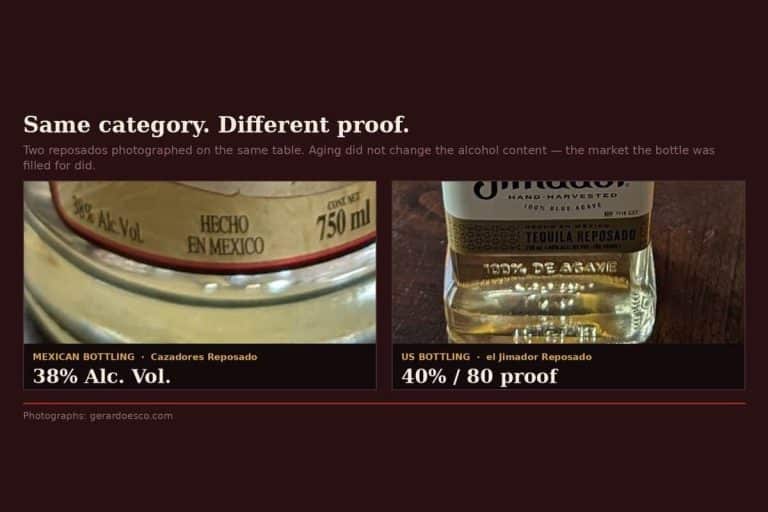
The pair on my table: Don Julio Blanco and Don Julio Reposado, both bottled at 38% for the Mexican market, both from NOM 1449 in Atotonilco el Alto, and the Reposado states eight months in American white oak on its back label. Same building, same agave, one variable. Vanilla and butterscotch appear; the raw green pepper of the blanco recedes. That is what eight months does, and you will recognise it in every reposado you drink afterwards.
You do not need an expensive pair for this. Any distillery that sells both will do — check that the NOM matches on both back labels, because brands sometimes move production between distilleries.
Read the label before you judge the liquid
Three things on the bottle change what you should expect in the glass, and all three are read in about ten seconds:
- 100% de agave, or not. A mixto can be up to 49% cane or corn sugar. If a tequila tastes thin and vaguely sweet, check this line before blaming the distillery.
- The alcohol figure. 35% to 55% is the legal range. It is printed on the front by law, and it predicts aromatic intensity better than price does.
- Any stated age. Reposado spans two to twelve months. A label that states the months is telling you where in that range it sits — most never do.
What the label will not tell you is whether the tequila contains additives. Mexican regulation permits up to 1% of finished volume in caramel colouring, oak extract, glycerin and syrup with no disclosure at all — which is why an unexpectedly smooth, sweet, almost syrupy mouthfeel is worth noticing rather than admiring. What can still be checked, and how to read the rest of the label.
Tasting mistakes: quick answers
Does a more expensive tequila taste better?
Up to a point, and then it stops. Past roughly $200 the money increasingly buys packaging rather than liquid. Four of the priciest-looking bottles I own are at the legal minimum alcohol level, which makes them quieter in the glass than plainer bottles costing far less.
Should tequila be chilled?
No. Cold suppresses aroma, and aroma is most of flavour. Room temperature in a copita or a Glencairn shows you what you actually bought. Chilling is a way to hide a spirit, which is fine if that is your intention.
Is a higher-proof tequila harder to taste?
It carries more aroma and more heat at once. Give it a minute in the glass and add a drop of water if the alcohol dominates — that is a legitimate technique, not a compromise. A 54% blanco opens up considerably with water; a 35% añejo has nothing left to open.
How many tequilas can I taste in one sitting?
Three or four, honestly assessed, beats eight. Palate fatigue sets in quickly with spirits at 38–55%, and the later pours get the benefit of the doubt rather than an evaluation. Taste the lightest first and keep water between them.
Most of these mistakes are easier to avoid with other people watching. If you are setting up a tasting for friends rather than for yourself, how to run a tequila tasting night covers the running order, the pour sizes and what to put on the table.
Conclusion
Understanding and avoiding these common tequila tasting mistakes will dramatically enhance your appreciation of this sophisticated spirit. Remember, proper tequila tasting is an art that rewards patience and attention to detail. By implementing these expert tips, you’ll be better equipped to explore the rich world of premium tequila and discover your personal preferences. Ready to put your new knowledge into practice? Gather some friends, select a few quality expressions, and start your journey toward becoming a more discerning tequila enthusiast.
Learn More About Tequila
- Learn How to Choose the Best Tequilas.
- What is Añejo Tequila? Complete Guide.
- Tequila Vs. Mezcal. Key Differences.
- How to Taste Tequila Like an Expert.


Your blog has become one of my favorite resources; I can’t wait for new articles.
Thank you for your feedback. I appreciate your comments.