

Understanding the Tequila Flavor Wheel: A Complete Guide
Did you know that expert tequila tasters can identify over 600 distinct aromatic compounds in a single spirit?…

Did you know that expert tequila tasters can identify over 600 distinct aromatic compounds in a single spirit? I’ve spent years studying the fascinating world of tequila, and I’m excited to share how the tequila flavor wheel can transform your tasting experience. Much like wine, tequila offers a complex spectrum of flavors that tell the story of its origins, production methods, and aging process. Let’s embark on a sensory journey that will elevate your appreciation for Mexico’s most celebrated spirit!
Understanding the Tequila Flavor Wheel: A Guide for Both Newbies and Enthusiasts
You know that moment when you’re sipping tequila and you just can’t put your finger on that subtle flavor? Yeah, I’ve been there too. Over the years, I’ve found that the tequila flavor wheel is your secret decoder ring for understanding what’s in your glass. Think of it as a tequila tasting guide.
The first time I encountered a tequila-tasting event, I was a total rookie, I could tell blancos from reposados and that was the extent of my knowledge. But when I saw this colorful circular chart, it completely changed how I approached tasting. The patron tequila flavor wheel isn’t just some fancy graphic; it’s a practical tool that breaks down the complex flavor profiles into categories that make sense.
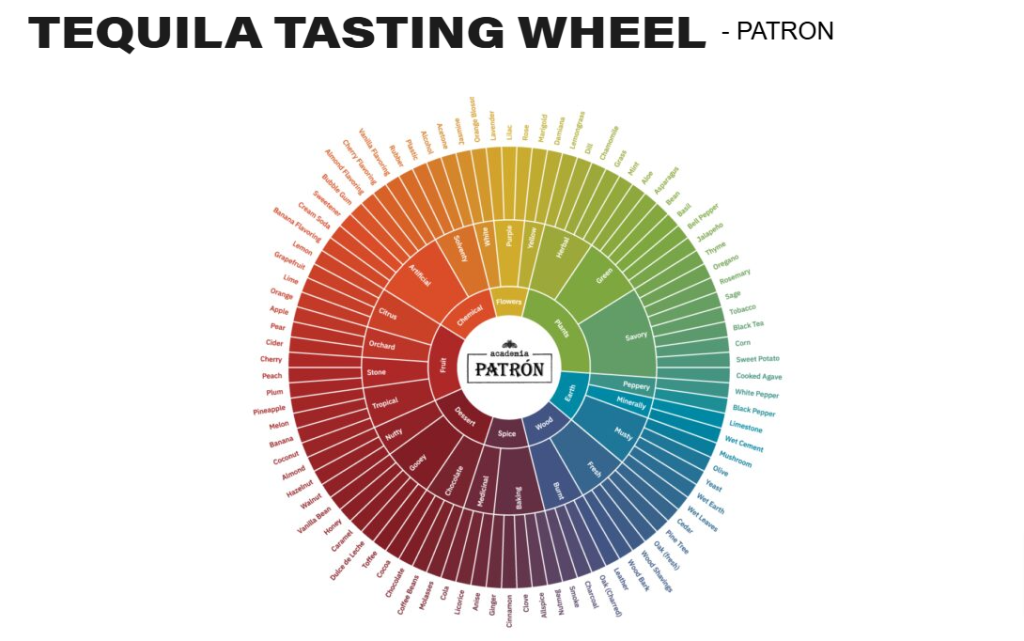
At its core, the tequila flavor wheel is divided into eight main categories: fruit, spice, flower, earth, dessert, wood, chemical, and plant. Each of these primary sections then branches out into more specific flavors. For instance, the fruit section includes everything from citrus notes (like lime and grapefruit) to tropical fruits (like banana and pineapple). This systematic approach helps you identify exactly what you’re tasting.
Here’s something interesting about tequila: the earthier notes in tequila can include things like wet cement, mushroom, and limestone. I know that may sound weird, but trust me, once you start paying attention, you’ll pick up on these subtle flavors, especially in high-quality Blancos.
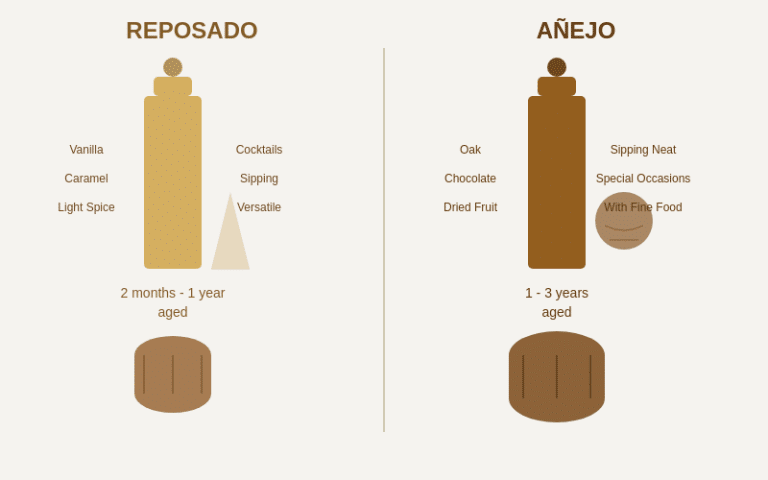
The wheel becomes super practical when you’re exploring different types of tequila. For example, reposados typically show more of those woody and sweet characteristics like vanilla, caramel, and oak. This is a result of barrel aging. Meanwhile, blancos often showcase more of the fresh, herbaceous, and pepper notes that come directly from the agave plant.
One mistake I made early on was trying to identify every single flavor on the wheel in each tequila. That’s not how it works! Each tequila has its own unique fingerprint of flavors, and the wheel is just there to help you put words to what you’re experiencing. Some days you might pick up on different notes than others, and that’s totally fine.
Pro tip: When you’re using the flavor wheel, start from the center and work your way out. First, identify the main category, then get more specific with the subcategories. This approach has aided numerous people overwhelmed by the variety of flavor notes.
For anyone serious about understanding tequila, I’d recommend printing out a copy of the wheel and keeping it handy during tastings. It’s especially helpful when you’re comparing different expressions from the same distillery.
Remember, developing your palate is a journey, not a destination. Some days you’ll nail every flavor note, and other days you might struggle to identify anything beyond “yep, that’s tequila.” The flavor wheel is there as a guide, not a rulebook.
Primary Flavor Categories in Tequila: Breaking Down What You’re Really Tasting
I used to think tequila flavors were pretty straightforward. But then I realized just how complex and fascinating these primary flavor categories are. Let me break down what I’ve learned over the years.
Eight main flavor categories form the foundation of every tequila: fruit, spice, flower, earth, dessert, wood, chemical, and plant. Think of these as your tequila taste building blocks.
The fruit category in the tequila flavor wheel encompasses a variety of fresh and dried fruits that contribute to the overall flavor profile of the spirit. Common notes include citrus elements like lime and orange, as well as tropical fruits such as pineapple and coconut, which add brightness and complexity. Additionally, some tequilas may present stone fruits like peach or cherry, enhancing the sweetness and depth of the tasting experience.
The flower category in the tequila flavor wheel features delicate and aromatic notes that can include hints of jasmine, marigold, and orange blossom. These floral aromas often add a layer of complexity and elegance to the tequila, enhancing its overall profile. When tasting tequila, these floral characteristics can evoke a sense of freshness and vibrancy, making the experience more enjoyable and nuanced.
The earth category surprised. Notes in this category include mineral notes, wet stone, and occasionally mushroom-like flavors. These terroir-driven traits stem from the agave’s soil. In my experience, highland tequilas tend to exhibit more mineral notes, while valley tequilas often have earthier characteristics.
The dessert category offers intriguing flavors. Notes in this category include sweet vanilla, caramel, and hints of chocolate or toffee. These dessert-inspired traits typically arise from the aging process of the tequila in oak barrels, which impart rich, sweet characteristics. In my experience, tequilas that are aged longer tend to showcase more pronounced dessert notes, while younger expressions often have a lighter, fresher profile.
In the spice category notes can range from black pepper to cinnamon, and they’re especially prominent in high-proof blancos. The high alcohol content in these high-proof expressions often amplifies the intensity of the flavors, allowing tasters to detect a spectrum of spices. A good example of a tequila with a spice profile is Patron Roca Silver.
The wood category in aged spirits, particularly in reposado and añejo tequila, plays a crucial role in shaping the flavor profile of the final product. Also known as tequila aging effects. When tequila is aged in oak barrels, it undergoes a process known as maturation, during which it interacts with the wood, absorbing various compounds that contribute to its taste and aroma. I just love those oak aging flavors….
The chemical category in the tequila flavor wheel plays a crucial role in shaping the flavor profile of aged spirits, particularly reposado and añejo tequila. During the aging process, tequila undergoes complex chemical interactions that influence its taste and aroma. Various compounds, including esters, phenols, and aldehydes, are formed or enhanced as the tequila matures, contributing to a spectrum of flavors and aromas that define the final product.
Finally, there’s the plant category in the tequila flavor wheel. The plant category in the tequila flavor wheel refers to the various botanical and herbal notes that can be found in different types of tequila. Some tequilas may exhibit more herbal qualities, highlighting the complexity of the agave itself or other herbs that may have been used in flavoring or aging processes. A good example of this tequila is Bribón Tequila Blanco (Blue Label).

As you experience tequila tastings you will learn that flavor categories in tequila interact and influence one another. A tequila may start with agave and citrus but reveal spice and earth notes as you sip. Temperature plays a crucial role in flavor presentation, with slightly below room temperature being ideal for tasting. It’s important to approach tasting with curiosity rather than trying to identify every note. The variability in flavor prominence makes tequila a continually interesting experience.
Secondary and Tertiary Flavor Notes: The Hidden Gems of Tequila Tasting
Secondary notes in tequila often include these fascinating vegetal elements. Beyond cucumber, you might catch hints of bell pepper, fresh grass, or even celery. I’ve experienced distinct olive notes in extra añejo tequilas and that’s been a game changer for me. These flavors aren’t as in-your-face as the primary notes, but they add incredible depth to the experience.
The tertiary notes are what I really like about tequila. We’re talking about subtle flavors that develop either through the production process or aging. Think butter, leather, tobacco, or even chocolate. I’ll never forget tasting my first well-aged añejo and picking up this distinct chocolate-covered coffee bean note. Wild!!!
Temperature and proper glassware are crucial for detecting subtle flavors in tequila – serve it at room temperature in a tequila flute or Glencairn glass for the best experience. Secondary notes like butteriness emerge during fermentation, while aged expressions develop tertiary characteristics of dried fruits and spices through barrel aging. Minerality varies by region, with highland tequilas often showing more pronounced mineral notes than valley ones. When tasting, start with primary flavors before exploring deeper – some unusual notes like mushroom or metallic hints are normal characteristics rather than flaws. Take your time developing your palate, as identifying these subtle flavors requires practice and patience.
How to Use the Tequila Flavor Wheel: A No-Nonsense Guide From a Fellow Learner
Looking at a tequila flavor wheel might seem confusing at first. But don’t worry! There’s an easy way to use it that I call the “zoom in” method. Instead of trying to find all the flavors at once, just take it step by step.
Start at the middle of the wheel with simple categories. Ask yourself: Does this tequila taste fruity? Spicy? Like wood? Go with your first thought; there’s no wrong answer! After you pick the main flavor, you can look for more specific ones. For instance, if it tastes fruity, try to figure out if it’s more like citrus (think lemons or oranges), tropical fruits (like pineapple), or fruits with pits (like peaches). Try closing your eyes while you taste – it really helps you focus on the flavors!
The temperature of your tequila makes a big difference in how it tastes. It’s best to serve it a little cooler than room temperature (around 63°F). This helps you taste all the subtle flavors better. Keep a notebook with the wheel printed in it to write down what you taste. It’s fun to look back later and see how your tasting skills improve!
When you smell the tequila (which is super important – about 70% of what you’ll notice comes from smell), take three quick sniffs instead of one long one. Your nose works better this way and won’t get tired out. Write down both what you smell and what you taste separately, because they might be different!
If you’re tasting aged tequila, start by looking for agave flavors in the middle of the wheel before trying to find flavors that come from the barrel. It’s helpful to taste different tequilas side by side – like comparing an unaged tequila (blanco) with one that’s been aged a little (reposado) from the same maker. Remember to drink some water between tastings to clean out your mouth.
Most importantly, don’t worry if you can’t name every flavor right away. The wheel is there to help you enjoy tequila more, not to test you. Sometimes just knowing whether you like it or not is perfectly fine! With this and some added knowledge about How to Choose the Best Tequila, you’ll be well on your way to becoming a well rounded tequila connoisseur.
Regional Flavor Variations: How Location Shapes Your Tequila’s Taste
The place where agave plants grow strongly affects how tequila tastes. You can really notice this when you try two different unaged tequilas (called blancos) that were made the same way but with agave from different areas. Unaged tequilas are best for tasting these differences because they haven’t spent time in wooden barrels, which can change their flavor.
There are two main regions where tequila comes from: the highlands (called Los Altos) and the valley (called El Valle). Each area makes tequila that tastes very different because of the local growing conditions. In the highlands, agave plants grow high up – between 6,000 and 8,000 feet above sea level. The soil there is reddish and contains lots of iron. Growing at this height is harder for the plants, so they make more sugar to survive.
Tequila from the highlands usually tastes citrusy and has hints of white pepper. It often has a mineral taste that reminds people of wet rocks. The agave plants in this area grow bigger and sweeter, which leads to stronger flavors in the tequila.
Valley tequilas taste quite different. Instead of being citrusy, they taste more like earth and herbs. This is because the soil in the valley comes from old volcanoes. The agave plants there grow smaller and are more fibrous. Valley tequilas often have subtle flavors that remind people of olives or mushrooms – this comes directly from the soil where the agave grew.
Weather plays a big part too. The temperature and rainfall affect how the agave grows and therefore how the tequila tastes. In the highlands, where it gets both quite hot and quite cold, the agave develops more fruity and flowery flavors. Even the water used to make the tequila matters; some distilleries in the highlands use spring water that flows through volcanic rocks, which adds mineral flavors to their tequila.
But here’s something important to remember: while these regional differences usually affect taste in certain ways, they’re not strict rules. Each tequila maker has their own way of doing things, which can make their tequila taste different from what you might expect from that region. Sometimes a valley tequila might taste more like it’s from the highlands because of how it was made.
Climate change is starting to affect these regional differences too. The highlands are getting more unpredictable weather, which changes how the agave grows and how the tequila tastes. This shows us that the way tequila tastes change over time.
The point of understanding these differences isn’t to decide which region makes better tequila. Instead, it’s about understanding how the place where agave grows affects how tequila tastes, and finding the ones you enjoy most. Some people prefer the citrusy taste of highland tequilas, while others like the earthy flavors from the valley. Both are good – it just depends on what you like!
Conclusion
The tequila flavor wheel is your key to unlocking a deeper appreciation of this complex spirit. By understanding and applying this valuable tool, you’ll not only enhance your own tasting experience but also gain the confidence to share your knowledge with others. Remember, becoming proficient at tequila tasting is a journey – take your time, trust your palate, and most importantly, enjoy the process!


I’m always amazed by the depth of investigation that goes into your blog posts.
Thank you for your feedback. I appreciate your comment.