

Silver vs Gold Tequila: What’s the Difference? (2026)
The short answer: Silver tequila (also called blanco or plata) is clear, unaged, and bottled straight from distillation —…

The short answer: Silver tequila (also called blanco or plata) is clear, unaged, and bottled straight from distillation — you taste the pure agave. Gold tequila (oro or joven) is usually the same young spirit with caramel coloring, oak extract, and flavorings added to make it look and taste smoother. In most mass-market brands, gold is not aged in barrels — that distinction belongs to reposado and añejo.
Some links on this page are affiliate links. If you buy through one, this site earns a commission at no extra cost to you. It does not change which bottles are recommended or what is said about them. Full disclosure.
If you want the honest agave flavor or a clean margarita, choose silver. If you want a softer, sweeter spirit for shots — and you don’t mind additives — gold does the job. Below, we break down exactly what’s in each, brand-by-brand differences (Jose Cuervo, Patrón, Olmeca), which one to buy for margaritas vs. shots vs. sipping, and the color myth almost everyone gets wrong.
| Feature | Silver / Blanco | Gold / Oro |
|---|---|---|
| Color | Clear | Amber-gold |
| Aging | Unaged (0–2 months in steel) | Usually unaged — color is added* |
| Source of color | Naturally clear | Caramel coloring & flavoring (most brands) |
| Flavor | Crisp, peppery, bright agave & citrus | Smoother, sweeter, light vanilla/oak |
| Alcohol (ABV) | ~40% (80 proof) | ~40% (80 proof) |
| Best for | Margaritas, cocktails, sipping a good blanco | Shots, casual mixed drinks |
| Price (same brand) | Comparable | Comparable or slightly higher |
| Example brands | Patrón Silver, Espolòn Blanco, Cazadores Blanco | Jose Cuervo Gold, Sauza Gold |
*A few premium “gold/joven” tequilas are genuine blends of blanco and barrel-aged tequila — a real, higher-end style — but most mass-market gold gets its color from additives.
What Is Silver Tequila?
Silver tequila — also labeled blanco or plata — is tequila in its purest form. It’s bottled either immediately after distillation or after resting in stainless steel tanks for up to 60 days. No wood, no color, no time to mellow.
Because there’s no barrel to hide behind, silver shows you exactly what the distillery is doing. You get the vegetal, peppery, slightly citrusy character of cooked blue Weber agave. Good silver is bright and clean; bad silver tastes harsh or chemical. It’s the honest one. Our full guide to blanco tequila goes deeper on what to look for and which bottles are worth buying.
Look for “100% de agave” on the label. That guarantees the bottle contains only agave sugars — no cane or corn sugar filler. If it just says “tequila” without that phrase, it’s a mixto, which by law only needs to be 51% agave.
What Is Gold Tequila — and Why Is Some Tequila Brown and Some Clear?
Here’s the myth-busting section. Most people assume gold tequila gets its color the way whiskey does: from years in an oak barrel. For the vast majority of gold tequila on liquor store shelves, that’s not true.
Mass-market gold tequila — the Jose Cuervo Especial Gold on every bar rail in America is the poster child — is almost always a mixto. That means it’s made from 51% agave and 49% other sugars (usually cane), then dosed after distillation with a legal quartet of additives:
- Caramel coloring (E-150): gives it that whiskey-like gold tint
- Oak extract: approximates a barrel-aged flavor
- Glycerin: adds smoothness on the palate
- Sugar-based syrup: softens the alcohol burn
Mexican regulations allow up to 1% additives by volume in any tequila category, and gold is where they get used the most. The result is a spirit that looks aged and drinks soft, at a price point well below actual aged tequila.
Gold tequila is also called oro or joven (“young”) on the label. A small number of premium jovens are legitimate blends of blanco with reposado or añejo — those are the exception, and they cost more.
Genuinely brown tequila — the kind that gets its color from wood — is labeled reposado, añejo, or extra añejo. That’s a different conversation, covered in our aging guide.
The Key Difference Most People Get Wrong: Coloring vs. Aging
If you take one thing from this page, take this: gold is not the same as aged.
Aged tequila earns its color and its flavor by sitting in oak barrels for months or years, slowly picking up vanilla, caramel, and smoke from the wood itself. It’s a real transformation, and it’s regulated:
- Reposado: aged 2 to 12 months in oak
- Añejo: aged 1 to 3 years in oak
- Extra añejo: aged more than 3 years
Gold tequila skips all of that and reaches the same visual result with a bottle of caramel color. A dram of Jose Cuervo Gold and a dram of a good añejo look almost identical in the glass. Taste them side by side and it’s a different sport entirely.
The words that matter more than “silver” or “gold”
Color is the wrong thing to read on the label. The right thing is whether it says 100% agave.
If those words are missing, the bottle is a mixto. Mexican law only requires 51% of the fermentable sugars to come from agave; the other 49% can be cane or corn sugar. Mixto is where most inexpensive gold tequila lives, and it is a better explanation for a rough morning than the color of the liquid is.
Separately, Mexican regulation permits up to 1% of finished volume in four additives — caramel coloring, oak extract, glycerin and sugar-based syrup — and none of them has to appear on the label. That is how a spirit that never went near a barrel arrives in the glass the color of one. There is no longer any third-party additive-free verification a shopper can look up, which makes the rest of the label matter more than it used to.
Same distillery, different bottle: what NOM 1487 shows
Every bottle of tequila carries a four-digit NOM number identifying the distillery that made it. Here is the part most guides miss: the same distillery usually makes both the mixto and the 100% agave bottle.
NOM 1487 is Bacardí’s distillery in Arandas, Jalisco. It produces Camino Real — a mixto, with the Gold bottled at 36% ABV — and it also produces Cazadores, which is 100% agave. Same building, same NOM, two completely different products. The NOM tells you who made it. It never tells you what grade it is.
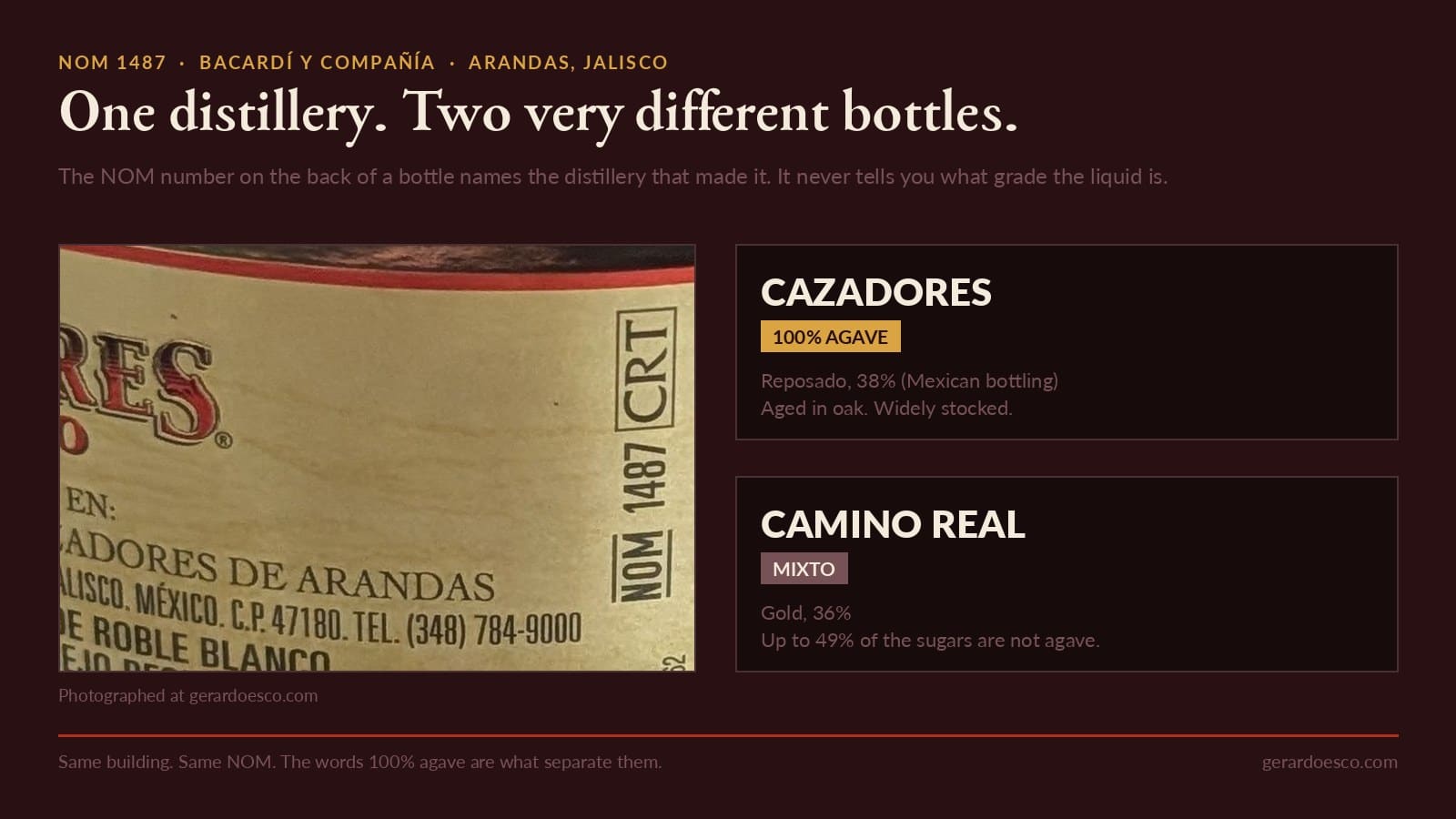
The same split shows up at the biggest distillery on this page:
| NOM | Distillery | Mixto bottles | 100% agave bottles |
|---|---|---|---|
| 1122 | La Rojenña (Casa Cuervo), Tequila, Jalisco | Jose Cuervo Especial Silver · Especial Gold | Cuervo Tradicional · 1800 · Reserva de la Familia |
| 1487 | Bacardí y Compañía, Arandas, Jalisco | Camino Real Blanco · Camino Real Gold (36%) | Cazadores Blanco · Reposado · Añejo |
Both rows say the same thing. The gold bottle and the good bottle can come off the same line, from the same company, under the same NOM. What separates them is printed on the front in small type: 100% agave, or nothing at all.
Which Is Stronger — Gold or Silver Tequila?
Neither. This is one of the most common questions we get, and the honest answer is that gold and silver tequila are almost always the same strength: 40% alcohol by volume, or 80 proof. That’s the Mexican standard, and it’s the same for both categories.
What people usually mean by “stronger” is harsher. Silver tequila tastes hotter and more aggressive because there’s no additive layer smoothing it out. Gold tastes softer because of the glycerin and sugar syrup, so you notice the alcohol less. Same proof, different mouthfeel.
Higher-proof tequilas do exist — some overproof and cask-strength bottlings run 46–55% ABV — but they’re a specialty category, not tied to silver vs. gold. For a full breakdown of tequila ABV ranges and how to read a proof label, see our tequila proof and alcohol content guide.
Which Should You Choose?
It depends entirely on what you’re drinking it in. Here’s the honest breakdown by use case.
For Shots
If you’re doing the classic salt-shot-lime ritual and you want it to go down easy, gold tequila is the traditional pick. The additives blunt the burn, and at $18–$22 a bottle you’re not overthinking it. Cuervo Gold is the default for a reason.
That said, if the point of the shot is actually tasting tequila — not powering through it — a chilled 100% agave silver is a much better drink. Try one and you’ll stop hiding behind salt.
For Margaritas and Cocktails
Bartenders overwhelmingly reach for silver tequila in a margarita. You want the agave to punch through the lime and orange liqueur, and silver’s bright, peppery character does exactly that. Gold’s caramel and vanilla notes muddy up the drink and add sweetness you don’t need — you’re already using triple sec or agave syrup.
For a step up, a reposado margarita gives you a little oak warmth without losing the citrus snap. But if you’re buying one bottle for cocktails, make it a solid 100% agave silver.
For Sipping Neat
Skip both. Silver is too hot for most people to sip without a chill, and gold is essentially a party mixer. If you actually want to sit with a glass and drink tequila slowly, buy a reposado or añejo. That’s where the vanilla, oak, and dried-fruit notes live — the flavors people assume they’re getting when they buy gold.
So, Is Gold or Silver Tequila Better Overall?
For most drinkers and most drinks, silver is the better bottle. It’s cleaner, more versatile, and — in 100% agave form — an actual craft product. Gold has a narrow lane: cheap shots and volume cocktails where the tequila is a supporting ingredient. If you’re spending more than $25, don’t buy gold. Buy a real reposado.
Gold vs Silver Tequila Price
Within the same brand, gold and silver are usually within a couple of dollars of each other. Jose Cuervo Especial Silver and Especial Gold both sit around $18–$22 for a 750ml bottle. Olmeca Silver and Olmeca Gold are typically $15–$20. The price is set by the base spirit — a young mixto — not by the color.
You start paying real money when you jump to 100% agave silver bottlings (Patrón Silver, Espolòn Blanco, Casamigos Blanco), which range from $25 to $55. And you pay again when you jump to actual barrel-aged reposado and añejo. Those price jumps buy you something. Paying $5 more for a gold mixto over its silver twin buys you caramel color.
Silver vs Gold: Brand-by-Brand
Most of the confusion around silver vs. gold plays out at the brand level. Here’s how the three most-searched brands actually compare.
Jose Cuervo Silver vs Gold
Both bottlings in the Cuervo Especial line are mixto tequilas — 51% agave, 49% other sugars — at 40% ABV. The base spirit in each is essentially the same young distillate.
Jose Cuervo Especial Silver is bottled clear and shows more of the young agave character: peppery, a little hot, with a slightly grassy edge. It mixes cleanly into palomas and cheap margaritas.
Jose Cuervo Especial Gold takes that same base and adds caramel coloring, oak extract, glycerin, and sugar syrup. The result is smoother, softer, and noticeably sweeter — the classic taste most Americans mean when they say “tequila.” It’s built for the shot glass.
| Cuervo Silver | Cuervo Gold | |
|---|---|---|
| Type | Mixto (51% agave) | Mixto (51% agave) |
| Aged? | No | No — color from additives |
| ABV | 40% | 40% |
| Best in | Palomas, cheap margaritas | Shots, sunrise cocktails |
| Price (750ml) | ~$18–$22 | ~$18–$22 |
Patrón Silver vs Gold (Reposado)
Patrón doesn’t actually sell a “gold” bottle. When people ask about Patrón Silver vs Gold, they almost always mean Patrón Silver vs Patrón Reposado — the reposado has the amber color they associate with “gold.”
Patrón Silver is a 100% agave blanco. It’s clean, smooth for a silver, with citrus and light pepper notes. Roughly $45–$55 for 750ml.
Patrón Reposado is the same 100% agave base rested in oak barrels for at least two months. That’s real aging, not caramel color. You get subtle vanilla and light oak on top of the agave. Similar price to the silver.
Both are excellent. Silver for margaritas and cocktails, reposado if you want something with a little more depth to sip or use in an old-fashioned-style tequila drink.
Olmeca Silver vs Gold
Olmeca is one of the most affordable name-brand tequilas on the market, and both the silver and gold are entry-level mixtos aimed at cocktails and shots.
Olmeca Silver (Blanco) is a young, clear mixto with a mild agave character and a slightly hot finish. It’s a workhorse for well drinks and budget margaritas.
Olmeca Gold is the same spirit with caramel coloring and flavoring added. Smoother than the silver, a touch sweeter, and marketed hard for shots.
If you’re stocking a home bar on a tight budget, Olmeca Silver is the more versatile pick. If you specifically want easy shots at a party, Olmeca Gold does the job for a few dollars.
| Olmeca Silver | Olmeca Gold | |
|---|---|---|
| Type | Mixto | Mixto |
| Aged? | No | No — color from additives |
| ABV | 38–40% | 38–40% |
| Best in | Well drinks, margaritas | Shots |
| Price (750ml) | ~$15–$18 | ~$16–$20 |
Worth knowing before you buy either one: the same distillery (NOM 1111) also produces the Olmeca Altos line, and Altos is 100% agave. Altos Reposado is a genuine reposado — by law it has spent between two and twelve months in oak — and both Altos expressions usually sell for only a few dollars more than the standard bottles. If you were reaching for Olmeca Gold because you wanted something smoother, Altos Reposado is the honest version of that — and it is where the two links below go.
Silver vs Gold Tequila: FAQ
Is gold or silver tequila better?
Silver is better for most uses. It’s cleaner, more versatile, and — in 100% agave form — a genuine craft spirit. Gold is a young mixto with additives and mainly shines in party shots and volume cocktails. If you’re spending over $25, buy a 100% agave silver or a real aged reposado instead of gold.
Which tequila is stronger, gold or silver?
Neither. Both are almost always 40% ABV (80 proof). Silver tastes hotter and more aggressive because there’s no additive layer, but the alcohol content is the same. Higher-proof tequilas exist, but they’re a specialty category unrelated to silver vs. gold.
Is gold or silver tequila better for shots?
Gold, if you want the traditional easy-drinking shot experience — the additives smooth out the burn. But a chilled 100% agave silver is a much better drink if you actually want to taste tequila instead of hiding it behind salt and lime.
Should I use silver or gold tequila for margaritas?
Silver. Bartenders overwhelmingly use silver (blanco) tequila in margaritas because its bright, peppery agave flavor cuts through the lime and orange liqueur. Gold’s caramel-and-vanilla notes add unnecessary sweetness and muddy the drink.
Why is some tequila clear and some gold or brown?
Two different reasons. Silver tequila is clear because it isn’t aged. Truly brown tequila — reposado, añejo, extra añejo — gets its color from real time in oak barrels. Most gold tequila is not aged; it’s a young clear spirit tinted with caramel coloring and flavored with oak extract and sugar.
What is gold tequila called?
Gold tequila is labeled oro or joven (“young”) in Spanish. In the industry it’s also called a “colored” or “abocado” tequila when additives are used. Occasionally, premium jovens are legitimate blends of blanco with reposado or añejo — those are the exception, not the rule.
Is gold tequila more expensive than silver?
Rarely. Within the same brand, gold and silver are usually within a couple of dollars of each other. Jose Cuervo Especial Silver and Especial Gold both sit around $18–$22. The base spirit costs the same — the additives don’t add meaningful price.
The Bottom Line
Silver tequila is the honest one. Gold tequila is the smoothed-over, dressed-up version of the same young spirit, built for the shot glass and the volume cocktail. Neither is bad — they just do different jobs. If you want the flavors people think gold has (vanilla, oak, dried fruit), skip both and buy a reposado or añejo. That’s where the real barrel-aged character lives.
For everything else, buy a 100% agave silver, keep it in the freezer, and you’ll cover 90% of your tequila needs.
Learn More About Tequila
- 10 Best Luxury Tequila Brands
- Complete Guide to Mexico’s Tequila Regions
- Tequila Tasting Terms
- How to Choose the Best Tequilas
- Types of Tequila


