
How to Taste Tequila Like a Master: Expert Guide for Beginners (2026)
Did you know that there are over 1,800 registered tequila brands worldwide, each boasting its own unique flavor…

Did you know that there are over 1,800 registered tequila brands worldwide, each boasting its own unique flavor profile? I still remember my first genuine tequila-tasting experience—it completely changed my perception of this sophisticated spirit! The days of shooting tequila with salt and lime are long gone. Today, we’ll delve into how to taste tequila like a master, appreciating its complex characteristics. Whether you’re a curious beginner or seeking to refine your palate, this comprehensive guide will walk you through the art of tequila tasting.
Some links on this page are affiliate links. If you buy through one, this site earns a commission at no extra cost to you. It does not change which bottles are recommended or what is said about them. Full disclosure.
What Are The Must-Know Tequila Basics?
Let me share my journey into understanding tequila fundamentals, drawing from both personal learning experiences and factual knowledge.
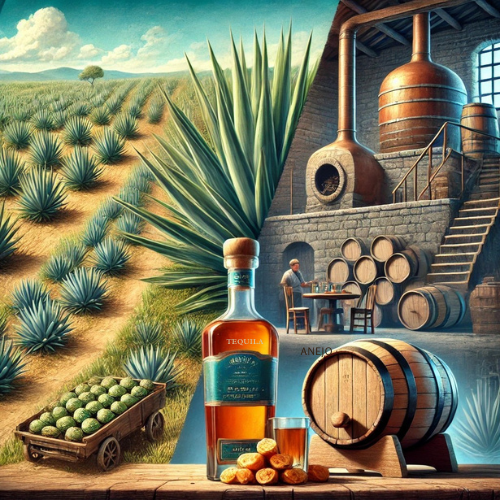
You know what really got me started on my tequila education journey? I used to think tequila came from a cactus. Boy, was I wrong! Tequila actually comes from the blue agave plant, which isn’t a cactus at all – it’s part of the lily family. That mistake led me down a fascinating rabbit hole of learning everything I could about this amazing spirit.
Let’s start with the absolute basics of what makes tequila. By law, authentic tequila must be made in specific regions of Mexico, primarily in the state of Jalisco. This is called tequila denomination of origin. Think of it like champagne – if it’s not from that specific region, it can’t legally be called tequila. The blue agave plants used for tequila take about 7-8 years to mature, which blew my mind when I first learned about it.
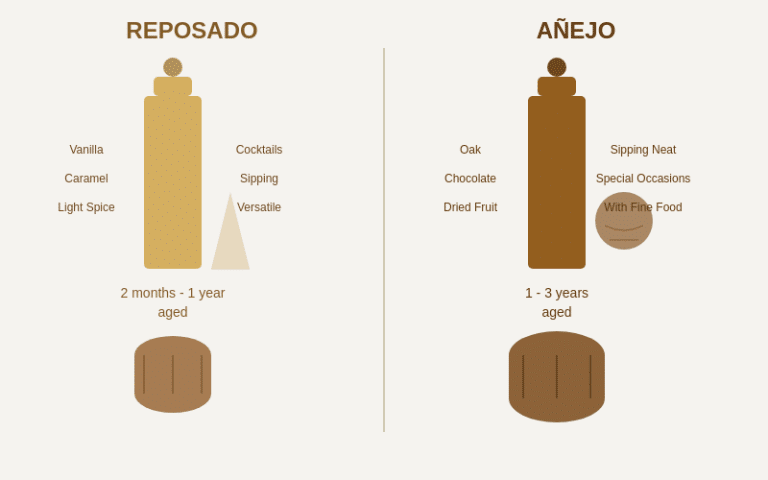
There are five main types of tequila you should know about. Blanco (also called silver or plata) is unaged and gives you that pure agave flavor. Reposado, which means “rested,” ages in oak barrels for at least 2 months. Añejo ages for at least a year, and Extra Añejo ages for 3+ years. There’s also Joven, which is a blend of Blanco with aged tequila.
One thing that drives me nuts is when people think good tequila should come with a worm in the bottle. That’s actually a marketing gimmick associated with mezcal, not tequila! And even then, it’s not traditional at all. Trust me, if you see a worm in your tequila bottle, that’s a red flag.

Here’s something I learned the hard way – always check the label for “100% agave.” If it doesn’t say that, you’re looking at what’s called a “mixto,” which can be made with up to 49% non-agave sugars. These are often the culprits behind those nasty tequila hangovers people complain about. The difference in taste and quality is seriously night and day.
When it comes to serving tequila, temperature matters more than you might think. I keep my bottles at room temperature, around 62-65°F. Storing tequila in the freezer might seem fancy, but it actually masks a lot of the complex flavors that make good tequila special.
Want a quick tip for spotting quality tequila? Look for an NOM number on the bottle. This four-digit number tells you which distillery made it. It’s like a birth certificate for your tequila! For example, NOM-1579 is the popular Casamigos distillery. I always jot down NOMs of tequilas I enjoy – it’s helped me discover some amazing brands.
Remember how I mentioned that expensive bottle doesn’t always mean better tequila? Some of my favorite blancos cost under $35. Brands like Olmeca Altos and Cimarron offer fantastic quality without breaking the bank. What matters most is that 100% agave designation and proper production methods.
The whole salt-and-lime ritual? That actually started as a way to make harsh, low-quality tequilas more palatable. A well-made tequila is smooth enough to sip on its own, though I’ll admit I still enjoy a lime wedge with my tequila now and then. Old habits die hard!
Essential Tequila Tasting Equipment
Let me share what I’ve learned about the essential gear needed for proper tequila tasting, both from hosting tastings and making plenty of rookie mistakes along the way.
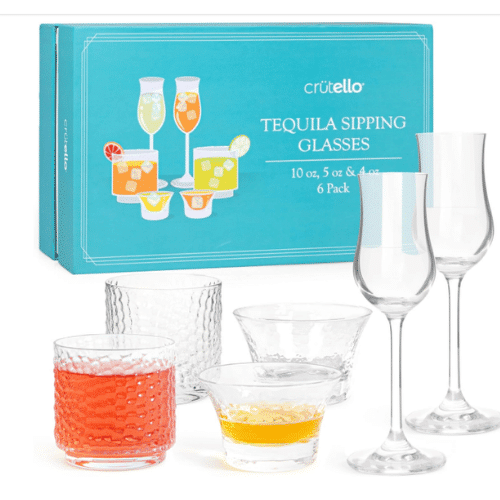
You might think any old glass would work for tasting tequila, but I learned this lesson the hard way during my first tasting event. I served everything in shot glasses, and we missed out on so many subtle flavors! The proper tequila glassware makes a huge difference. You’ll want a tulip-shaped glass, similar to a champagne flute but with a wider bowl. These Riedel tequila glasses are specifically designed to concentrate the aromas – they’re pricey at around $25 each, but Glencairn glasses work great too and usually cost about half as much.
Temperature control is something I wish someone had told me about earlier. You’ll need a reliable thermometer to ensure your tequila is at the ideal serving temperature of 62-65°F (18°C). I keep a simple digital cooking thermometer handy. Anything significantly warmer or colder can mask those delicate agave notes we’re trying to appreciate.
One game-changing tool I’ve discovered is a proper-tasting notebook. Sure, you could use your phone, but there’s something about writing down your observations that helps train your palate. I use a water-resistant notebook because, let’s face it, spills happen! Make sure to note the NOM number, age statement, and specific aromas you detect.
Here’s something that might surprise you – clean coffee beans are fantastic as palate cleansers between different tequilas. I learned this trick from a master tequilier in Jalisco. Just a quick sniff of whole beans helps reset your nose. Keep a small jar of them on your tasting table.
Water is absolutely crucial for any tasting session. I always set up three types: room temperature still water for drinking between samples, ice water for diluting (sometimes you need to lower the ABV to detect certain flavors), and sparkling water as a palate cleanser. Those little glass water pitchers you see at fancy restaurants? They’re perfect for this setup.
Let’s talk about spitting. Yeah, I know it sounds gross, but if you’re seriously tasting multiple tequilas, you need proper spittoons. I learned this after one particularly “enthusiastic” tasting where everyone’s notes got progressively less coherent! You can buy professional ones, but small opaque plastic cups work fine. Just make sure they’re dark colored – trust me on this one.
One often-overlooked item is good lighting. Those romantic dimly-lit tastings might seem fancy, but you need to see what you’re drinking. I use a small LED desk lamp that provides bright, neutral white light. This helps you assess the tequila’s clarity and color accurately. Natural daylight is ideal, but not always practical.
Here’s a pro tip I picked up: keep some neutral-scented hand soap nearby. Perfumes, lotions, or strongly scented soaps can interfere with your ability to detect subtle aromas. I made this mistake once when I showed up wearing cologne – couldn’t smell anything but my own perfume all evening!
And don’t forget about temperature control for your bottles. A simple wine cooler set to the right temperature works great, but if you’re just starting out, a regular thermometer and room temperature storage will do fine. Just keep those bottles away from direct sunlight and heat sources – learned that one after storing some nice añejo near a window. Big mistake!
Remember, you don’t need to buy everything at once. Start with the basics – proper glasses, a notebook, and good lighting. The rest can come as you develop your tasting journey. Just please, whatever you do, don’t use shot glasses. Your taste buds will thank you!
The Visual Assessment
Lets talk about mastering the visual assessment of tequila – it’s way more than just checking if it’s clear or brown! I remember being totally confused during my first proper tasting when someone mentioned “legs” on the glass. I just nodded along, pretending I knew what they meant.
First things first – you need to hold that glass up against a white background. I keep a plain white piece of paper handy for this exact purpose. A white sheet or even a clean white napkin works fine. The key is getting a neutral backdrop so you can really see what’s going on with your tequila. I learned this after trying to assess color against my dark wooden table – not my brightest moment!
Let’s talk about clarity. A quality Blanco tequila should be crystal clear, like pure water. If you see any cloudiness or floating particles, that’s usually a red flag. I once bought a bottle that had some slight haziness to it – turned out it had been stored improperly and exposed to extreme temperatures. The taste was off too, unsurprisingly.
When it comes to aged tequilas (reposados and añejos), color tells an amazing story. The hue should range from pale straw in young reposados to deep amber in extra añejos. Here’s a neat trick I picked up: hold the glass at a 45-degree angle. This lets you see how the color graduates from the deepest part to the edges. A quality aged tequila will show subtle color variations rather than appearing uniformly dark.
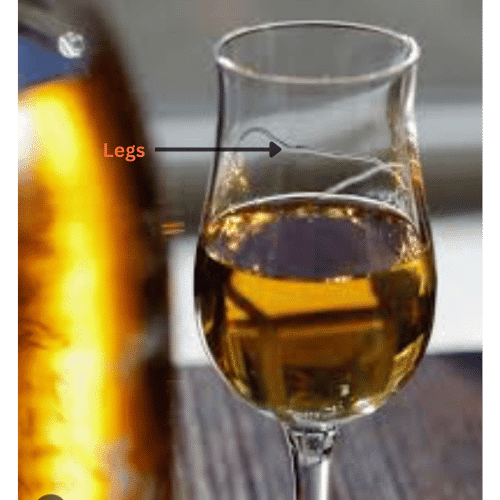
Now, about those “legs” I mentioned earlier – they’re called viscosity trails or “tears.” After swirling your tequila, watch how it drips down the side of the glass. Quality tequila will form slow-moving trails that some people call legs. The thicker and slower these trails, the higher the alcohol content and oils from the agave. I’ve noticed that well-made blancos often have more pronounced legs than cheaper mixtos.
Temperature can really mess with your visual assessment. If the tequila’s too cold, it can develop a slight haze that might make you think something’s wrong with it. I keep my tasting room at around 68°F (20°C) to avoid this issue.
One thing that surprised me was learning about the “pearl test.” When you shake a bottle of tequila, the bubbles that form (called pearls) should be uniform in size and dissipate at a medium pace. If they disappear instantly or hang around forever, something might be off with the alcohol content. Though honestly, I don’t recommend shaking expensive bottles just to check this!
Pay attention to how the liquid coats the glass when you swirl it. Quality tequila should have a certain weightiness to it – what experts call “body.” It should coat the glass evenly without looking watery. Think about the difference between whole milk and skim milk – that’s the kind of visual difference we’re talking about.
And here’s something I wish I’d known earlier – artificial coloring is a real thing in some tequilas. A super dark añejo isn’t necessarily better or older. Some producers add caramel coloring to make their tequila look more aged than it is. Natural color from barrel aging should have subtle variations and a kind of depth to it that artificial coloring just can’t match.
Remember, visual assessment is just the first step in tasting, but it can tell you so much about what you’re about to drink. Just don’t be like me at my first tasting – it’s totally okay to ask questions and learn. Nobody’s born knowing how to assess tequila visually!
Tasting Techniques and Flavor Analysis

How do we properly taste and analyze tequila? – I’ve definitely made some interesting discoveries (and mistakes!) while learning these tequila tasting techniques.
Proper tasting is a whole systematic process that I’ve come to really appreciate. Let me break down what I’ve learned about doing it right.
First up is the “Kentucky Chew” – yeah, I know it sounds weird, but trust me on this. Take a small sip (about a teaspoon) and gently move it around your mouth while breathing in through slightly parted lips. This might feel a bit silly at first, but it’s amazing how many more flavors you’ll pick up. The first time I tried this, I was shocked to taste hints of Oak I’d completely missed before.
Temperature really affects what flavors you’ll detect. I keep my tasting tequila at exactly 62°F (18°C), which I’ve found is the sweet spot when it comes to tequila drinking temperature. Any colder and you’ll miss a lot of the subtle flavors – I learned that the hard way after serving an expensive añejo straight from the fridge. Do not do that…..!
Here’s my step-by-step process for analyzing flavors:
Start with the raw agave notes – is it earthy, fresh, or vegetal? Good tequila should have a distinct agave character, even in aged expressions (reposado tequila flavors). Then move to the secondary flavors: citrus, pepper, herbs. Finally, look for those deeper notes like vanilla, caramel, or oak in aged varieties.
One game-changing tip I picked up is to try the tequila at different dilutions. Start neat, then add tiny drops of room temperature water. I use a pipette to add just 2-3 drops at a time. It’s amazing how adding a little water can open up completely new flavor profiles. The first time I tried this with a reposado, suddenly I could taste subtle cinnamon notes that weren’t there before.
Let’s talk about the “retronasal” experience – basically, the flavors you get when you exhale after swallowing. This is where a lot of the complexity shows up. After swallowing, breathe out slowly through your nose with your mouth closed. Different flavors will appear in waves. I love agave flavors in tequila. I keep a flavor wheel handy to help identify what I’m tasting, because sometimes it’s hard to put words to these subtle notes.
Taking notes is super important. I used to think I’d remember everything, but trust me, after tasting a few different expressions, they start to blur together. I write down my first impressions immediately, then come back to the same tequila 10-15 minutes later. You’ll be surprised how the flavors can evolve as your palate adjusts.
One mistake I see people make is rushing between samples. I wait 3-5 minutes between different tequilas, using water and coffee beans to cleanse my palate. And if you’re tasting multiple expressions, start with blancos and work your way up to extra añejos. Going backwards will overwhelm your taste buds.
Here’s something interesting about proof points – most tequilas are bottled at 40% ABV, but some premium expressions come in at higher proofs. Higher alcohol content can carry more flavor compounds, but you might need to add a few drops of water to really appreciate them. I once tried a 46% ABV blanco that completely changed character with just a touch of water.
And don’t forget about the finish – how long do the flavors last after swallowing? Quality tequila should have a nice, long finish with evolving flavors. If it disappears quickly or leaves an unpleasant burn, that’s usually a sign of lower-quality production methods.
Remember, there’s no “wrong” way to experience flavors – we all taste things differently. But using these systematic techniques will help you identify and appreciate the complexity that good tequila has to offer. Just be prepared for some interesting looks when you’re doing the Kentucky Chew in public!
Developing Your Tasting Vocabulary
You know what’s funny? When I first started, I thought people who talked about tasting “leather” and “wet stone” in their tequila were just being pretentious. But then I had this lightbulb moment during a tasting when I suddenly got a distinct aroma that reminded me exactly of my grandfather’s old leather armchair. Now I totally get it – these descriptors aren’t made up, they’re memory triggers!
Building a tasting vocabulary starts with understanding the basic flavor categories in tequila. I keep a simple system: primary flavors (raw agave, which can be earthy, vegetal, or sweet), secondary flavors (citrus, pepper, minerals), and tertiary flavors (anything from barrel aging like vanilla, caramel, or spices). When I first started, I focused on just identifying which category a flavor belonged to before trying to get more specific.
Here’s a practical tip that really helped me – I created what I call my “tequila flavor library” at home. It’s just small jars with different ingredients mentioned in tasting notes. Things like crushed black pepper, vanilla beans, dried herbs, and citrus peels. I smell these before tastings to help train my nose and brain to recognize these notes in tequila. Just don’t store them near your tasting area – learned that lesson when my pepper jar spilled and messed up everyone’s sense of smell!
One breakthrough moment came when I stopped trying to use “fancy” words and started using personal memory associations instead. That mineral note in some Blancos? It reminds me of the smell of rain on hot sidewalks. The vegetal note in others? Like fresh-cut grass on a summer morning. These personal references helped me remember and identify flavors much better than trying to memorize someone else’s tasting notes.
Temperature can really affect how we perceive and describe flavors. I noticed that slightly warmer tequila (around 65°F) helps me identify more subtle flavors, while cooler temperatures tend to mute them. This is why I always note the temperature when I’m writing down tasting notes – it helps explain why the same tequila might taste different on different occasions.
Writing detailed notes has been crucial in developing my vocabulary. I use the “three sip” rule: first sip for overall impression, second sip for specific flavors, third sip for finish and complexity. After each tasting, I compare my notes with official tasting notes or reviews. Sometimes I’m way off, but that’s part of the learning process!
Here’s something that really improved my tasting vocabulary – comparing similar tequilas side by side. Like tasting two different blancos from the highlands region, or two reposados aged for the same amount of time. The subtle differences help you pick up on nuances you might miss when tasting just one expression at a time.
I’ve found that palate fatigue is real, and it can really mess with your ability to describe flavors accurately. After about 4-5 samples, everything starts tasting the same. I now limit my serious tasting sessions to 3-4 expressions max, with plenty of water and time between each. My notes from the end of those early marathon tastings were… let’s just say less than useful!
Being specific with your descriptions is crucial. Instead of just “fruity,” is it citrusy like lime, or tropical like pineapple? Rather than just “sweet,” is it more like honey, cooked agave, or vanilla? These specific references help create a more accurate flavor profile and make it easier to remember what you’re tasting.
The most important thing I’ve learned? Don’t be afraid to use unconventional descriptors. If that añejo reminds you of your grandmother’s chocolate chip cookies, that’s a valid tasting note! The best tasting notes are the ones that mean something to you personally.
The same pour is not the same drink
Everything above assumes a standard pour. It is worth knowing what that pour actually contains, because tequila is legal anywhere from 35% to 55% alcohol and the difference is not academic at a tasting. A 1.5 oz measure delivers:
| Bottle strength | What sits there | Pure alcohol in a 1.5 oz pour |
|---|---|---|
| 35% | the Mexican legal minimum — four premium decanters on my shelf | 15.5 ml |
| 38% | the usual Mexican-market bottling, including my Don Julio | 16.9 ml |
| 40% | the US legal minimum, and most US bottlings | 17.7 ml |
| 43% | Tears of Llorona, and other cask-finished bottles | 19.1 ml |
| 54% | G4 108, near the legal ceiling | 24.0 ml |
The bottom row carries about 40% more alcohol than the 40% row, from an identical-looking pour. That governs three practical things at a tasting: how quickly your palate tires, whether a drop of water is useful, and how many bottles you can honestly assess in one sitting. Pour the high-proof bottles smaller and taste them later, not first. Where each bottle sits in the range.
It also explains a frustration people blame on their own nose. Alcohol carries aroma, so a 35% bottle gives you less to smell — and on my shelf every bottle at the 35% floor is an expensive, elaborately packaged one. The ceramic decanter is quieter in the glass than the plain bottle beside it.
Write down the four fields that actually matter
I keep records on 87 tequilas, 36 of them bottles on my own shelf across 24 distilleries. Most of what I first wrote down turned out to be decoration. Four fields do the work, and all four are on the bottle in front of you:
- The NOM. Four digits naming the distillery that actually made it. Brands move production; two bottles of the same brand on my shelf carry different NOMs. Look one up.
- 100% de agave, or not. The single most useful line on the front label.
- The alcohol figure, and which market the bottle is from. My Don Julio reads 38% because it was bottled for Mexico; the US bottling of the same expression is 40%. Record both facts or the note contradicts itself later.
- Any stated age. “2 meses” and “eight months” are both legally reposado. That gap is fourfold.
Tasting notes about caramel and pepper are worth keeping, but they are the part you can reconstruct by opening the bottle again. The four fields above are the part you cannot, once the bottle is gone — and they are what let you notice, six months later, that the two bottles you liked best came out of the same building.
Tasting questions people actually ask
Do I need a special glass?
A copita or a Glencairn helps, because a narrow rim over a wider bowl collects aroma instead of letting it escape. A caballito — the tall straight shot glass — is not a mistake, it is a different ritual, designed for tequila with sangrita rather than for assessment. Use a wine glass before you use a shot glass for tasting.
Should I add water?
At 43% and above, a drop or two is a legitimate technique rather than a compromise: it lowers the alcohol enough for the aromatics to come forward. At 35–38% there is nothing to open up, and water only dilutes what little is there.
How do I stop everything tasting the same after three pours?
Palate fatigue at these strengths is real. Taste the lightest and lowest-proof first, keep water between pours, and stop at four. A fifth pour gets the benefit of the doubt rather than an evaluation, which is how flattering notes end up in a notebook.
Can I tell if a tequila has additives by tasting it?
Not reliably. A pronounced vanilla sweetness and a syrupy mouthfeel in a young tequila are worth noticing, but glycerin and syrup are permitted up to 1% of finished volume with no label disclosure, and they are designed to be hard to spot. What can still be checked.
Technique is only half of it. Most of what spoils a tasting is decided at the shelf, before a single bottle is opened — which bottle, in which order, and at what strength. The tasting mistakes that cost the most, including the one almost nobody counts as a mistake.
Two practical follow-ons. The glass changes what you get out of a pour more than almost anything else you can buy — the glassware and tools worth owning. And once you can taste properly on your own, it is worth doing it with other people: how to run a tequila tasting at home, with a structure that keeps it honest.
Conclusion
Tasting tequila is an incredible journey that opens up a world of flavors and traditions. Remember, developing your palate takes time and practice – don’t feel pressured to identify every note right away! Start with these fundamental techniques, and you’ll be surprised how quickly your tasting abilities develop. Ready to put your new skills to the test? Gather some friends, select a few quality tequilas, and show them how to taste tequila like an expert.
Learn More About Tequila
- Tequila Vs. Mezcal Key Differences
- How to Choose the Best Tequila
- What is Añejo Tequila? Complete Guide
- What is A Tequila Flavor Wheel? Complete Guide